Art Education, Project Ideas

Betsy Youngquist – Creative Minds Art History Project

For my final Creative Minds class of this Artshop semester, I chose another current artist as the class inspiration that would also give us the opportunity to work with some summery materials (Based in MI, we are hoping it gets warmer someday!).


Betsy Youngquist is a surreal mosaic and sculpture artist who works with a lot of unique materials traditionally associated with crafting like beads and doll making supplies. On her website, she writes, “Children with their vast capacity for wonderment weave tales of gossamer, create magic kingdoms, and pass through invisible portals to lands of untold enchantment. As we follow the Yellow Brick Road in quest of Emerald Cities, those portals become hidden to us, removing our access to the wonderland within. Creating art is a means to return to the looking glass and reenter the garden where flowers whisper and birds can talk. As my beaded characters emerge they carry with them tales from the other side of the mirror. I am grateful for the joy and astonishment experienced through this journey.”

Since we only had one class to finish this project and student attention spans vary, I took inspiration from one of her smaller works, a bedazzled seashell! As mentioned before, this project was also perfect to get everyone in the mindset of warm weather vibes. It may only be a high of 45-50 degrees as of tomorrow but at least we didn’t get the snow that was projected to fall this weekend … Again, Michigan problems :(.

IMG_20190425_151756

Having an array of hobby tweezers with different angled ends is a must for this project to help in placing the beads, though there is no need to use teeny tiny seed beads as you can see from the finished projects! All of my Creative Minds students have a disability of some type, and many struggle with dexterity. The tools I’ve linked above helped them enjoy the process and experience success in creating their surreal, whimsical shells. It was easiest for them to apply a bit of glue inside the shell first, and then use the tweezers to just set the bead into the glue, just in case you want to try this at home! All you need is an array of different sized and shaped beads for creating patterns – glass, plastic, or whatever material is available to you works just fine. Though you could use specialty glues like E6000, we used tacky glue in class which adhered well and dries crystal clear. I also made sure to get some “oddities” as a nod to the surrealist quality of Youngquist’s work in the form of some realistic eye charms, though of course students will add their own creative edge to the inspiration project (Frozen, anyone? 😉 ). They were encouraged to start with a central focal point created either by a larger found object or a grouping of one color, and work radially out from that point.

I am so impressed with the results! They really rose to the challenge and created some gorgeous conversation pieces to display in their home. Beaded mosaics are another project that can be adapted to all ages and abilities, and something that anyone can enjoy even if they don’t feel they are “good at art”. The repetitive process of placing beads becomes calming and meditative as you work. A new semester starts in a week, and I am looking to learning about more artists from the present and past together with a new group!

Standard
New Work

New Work Inspired By Spring (and Stress)

I’ve taken a short break from my new series to work on a stand alone project for a competition coming up. I always have a couple sketchbooks going filled with any ideas for art projects that I’ve thought up over the past 10+ years, some I’ve gotten to and some I haven’t. I think it’s the fact that I live in Michigan and the winter has been never ending that made me want to work on something inspired by plants, insects, and basically signs of life. When I began this project, I had also been having a bit of a rough patch emotionally with some minor life trials, nothing vast on their own but when all occurring at the same time… yikes. I had done a watercolor sketch way back in 2008 of a crying woman with ladybugs crawling our of her eyes, but it ended up looking way too gross which took away from the original intent. Another previous piece (Seriously, check it out if you haven’t already – it has a fun story.) from more recently incorporating butterfly designs into the human form had been well received when showed at a curated exhibit and to my surprise actually ended up selling right away. With this in the back of my mind, I decided torn butterfly wings were the perfect vehicle for melancholia – not so creepy crawly.

From this creative soup came my newest piece, Torn, on 18×24 mixed media paper.

torn

One of the biggest challenges with this piece was maintaining a balance of light and dark and achieving the bold contrast I knew I wanted without the figure looking disjointed. The white outlined pattern taken from both the background’s ginkgo leaves and butterfly designs layered overtop the black watercolor drip of her torso helped to blend the dark areas into the light and remove some of the heaviness. I included pieces of stark black scattered throughout the piece to balance everything out, from the hair and parts of the wings to the thin branches in the background.

butterfly shirtAn additional challenge – my two loves are watercolor and colored pencil, and I especially love to utilize these two vastly different mediums together. What paper to use, though? Colored pencils just cannot blend on watercolor paper with the strongly textured, bumpy surface so I tend to opt for mixed media paper when using wet and dry mediums together. However, watercolor does not  act the same way on mixed media paper as on traditional watercolor paper. Doing wet-on-wet color application leads to some really blotchy, unpleasant results so I had to be patient and do a lot more light layering to build up to the look I wanted.

All in all, I am happy with the result and enjoyed turning one of my concepts in idea purgatory into a reality :). Prints of all types are available in both my Redbubble Shop and Ebay Store.


Standard
Art Education, Project Ideas

Elizabeth Jameson – Creative Minds Art History Project

Hello all, it’s time for another artist based creative project! I have a great group of ladies in my Creative Minds class this semester at Artshop, and have loved seeing how they interpret the techniques of the masters and make their creations their own. Though often times the focus of my class is renowned artists from history, I also love sharing inspiring and accomplished artists from the present with my students. I work primarily with adults with disabilities so I especially enjoy the opportunity to share the stories of artists with disabilities with the class, and how the artist’s identity as a person with a disability influenced their art and legacy.

Elizabeth Jameson is a visionary artist who found her creativity through an unexpected MS diagnosis. Jameson is a Doctor of Law, and her lifelong passion and driving force for her career was to fight injustice and poverty through the law, striving to make a difference. In the late 70s and early 80s her health took a turn suddenly, and she was eventually diagnosed with Multiple Sclerosis. Due to the progressive nature of her illness she was unable to continue working, and she felt her purpose was lost. A caring friend pushed her into trying an art class just to get her out of the house, and this class ended up changing the way Jameson saw the world and her life. Art teaches us to look at the world through a creative lens, and upon receiving her usual MRI scans from a doctor’s appointment, she came up with  the idea to etch in the stark, clinical and emotionless black and white images with rainbow colors. Her work evolved from there. Today, Jameson is still living her dream of changing the world, and says the goal of her work is to encourage others to, “contemplate the beauty of the brain, discuss what it means to live in an imperfect body, and to stare directly at the imperfect brain’s beauty and complexity with curiosity”. She collaborates with Neuroscientists and a studio assistant to continue her work.

jameson_carousel_utep-gift-1

Messages that can be learned from Jameson’s art and story are that with creativity it is never too late to begin, it doesn’t make you any less of an artist to ask for assistance, and individuals with disabilities have an unlimited potential to change the world for the better.

Obviously, we don’t have access to MRI machines ;), but to pay homage to Jameson’s art we did drawings with colored pencil on black paper. Students were asked to imagine a visual representation of the inside of their head, thinking about the emotions or memories different colors may symbolize, what straight, smooth lines versus wavy or jagged lines may say about what is going on inside their head, and to think of any representational forms that speak to who they are. Some students chose to indicate blocks of color for the different things that consume their thoughts, and some chose to do an all-over image or pattern. One student even dated hers in acknowledgement that one’s mental state changes over time.

I can see this project being an interesting activity for any age, and was pleased within my class on how a dialogue between the students about the meaning of their developing “artistic MRIs” grew as they worked.

As always, feel free to steal, share, or try it yourself at home :). I am hoping others will enjoy and become inspired by trying this project out.


Standard
New Work

New Series and The Symbolism of Color

I’ve always been interested in the social significance of color, both in cultural symbolism and in the psychology of how color can affect our emotions. Showing solidarity for a specific cause through a group of people all wearing the same color on a certain day or for the attendance of a specific event has become a common practice. My partner has a viscerally negative reaction to the color yellow, and will be caused agitation if surrounded by a bright yellow environment (so basically he just loves the bright yellow flower print wallpaper that was complimentary with the bathroom in our home upon move-in). I have received shocked reactions even from people in my own young-adult age bracket at the mention that if I ever get married at some point, I probably wouldn’t choose a white wedding dress. These are just a couple of examples of the strong reactions people have to color as a form of communication, tradition, and emotional influence in both our exterior environment and more personally in how we choose to adorn ourselves and present our bodies to the world.

Of course, I will be working on other separate projects in between but my main focus going forward will be on a new series exploring the symbolism of different colors worldwide, taking the significance of specific colors from regions all over the world and integrating these often opposing meanings into a single story about that color. I will be focusing on 5 main colors, the 3 primaries of red, yellow, and blue and then black and white. The first color I have represented is white.

Depending where you are, white can symbolize new beginnings and a clean slate, or endings and mourning making it very much a bookend sort of color. It symbolizes traits that are considered more docile like purity, innocence and virtue, but also more courageous sentiments like protection and sacrifice. White is also a color that across cultures is often associated with femininity.

white final

For “The End Is Also The Beginning” I used a mixed media approach, choosing the mediums that would lend themselves best to the look I wanted to achieve for different parts of the piece. I used watercolor for the ice figures, snow, clouds, and water. I used prismacolor pencil (including metallic silver accents) for the figure, rabbit, and areas of fine detail like the blossom trees and patterns in the sky. I used scrap fabric for the pattern on the dress (actually left over from the hemmed curtains hanging in my art room. This is why you never toss scraps!), and flat-back acrylic pearls and beads for the decoration on the neckline of her gown, and her earrings.

I have a couple of juried shows coming up, and this will be one of the pieces getting sent off, so wish me luck!

Standard
Artsnacks Unboxing

March Artsnacks Unboxing

Hello all! Obviously I’m a little late, but it’s been a weird month. I told myself I had to at least have this posted before March was over, so here I am!

53786370_10156360021179895_3968639679464472576_n

In this box, I received:

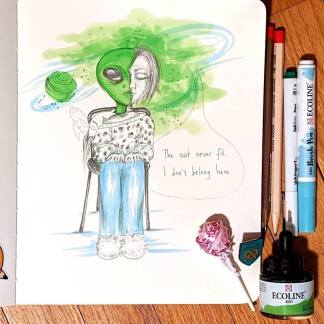
The Artsnacks gods must really want me to start using more green in my artwork, because I overwhelmingly receive green products where random color selection is concerned … And to be honest, I can only think of one other green artwork I have done in the last 10 years! That’s what I love about Artsnacks though, it gets you out of your box!

Now, for reviews! As a watercolor enthusiast, I was interested to try Ecoline’s liquid watercolor. It’s so runny compared to what I am used to using that it was a little hard to get used to at first, but it is definitely a quality product with rich color, just a different experience with a bit of a learning curve. I would be interested to try darker colors which are usually what I gravitate towards with watercolor, and also to experiment with how multiple colors blend or layer. I found it more difficult to get as wide a range of values with this product as I can with tube watercolors. To me it seems like these watercolors would be better suited to filling in concept sketches or more graphic illustrations like comics. Prognosis: Good product, uncertain operator!

Now on to the brush pen! It was really great to get to try out multiple Ecoline products being that this was a line I’d never tried before. I cannot get enough brush pens. I’ve mentioned before how my favorite have been Tombow’s water soluble brush markers, but what is great about these Ecoline pens is that they can be used in conjunction with Ecoline’s other products. Their brush pens, like Tombow’s, are water soluble and can be re-wet to blend even after they’ve dried. These Ecoline brush pens can be dipped in Ecoline’s watercolors or inks to mix colors and produce ombre and other blended effects which is a fantastic bonus. These products do seem to focus on the more pastel/tropical/ultra neon color spectrum which is not at all the palette I usually work in, but it is great for projects that call for a bright pop of color.

As someone who really enjoys using watercolor and ink pens together, I’m glad this box came with a pen to try as well. Drawing will always be my first love, and the bright colors available from the KINGART fine liners pair well with the Ecoline watercolors for seamless outlines. With a super thin, smooth line quality and no bleeding, I am definitely considering getting some of these as right now the only liners I have are black. They are also waterproof which make them a perfect fit for watercolor work.

Lastly, I will talk about the incredibly aesthetically pleasing pencils. I didn’t really get the brown sugar scent from the wood that was described on the information card I got with these products, but I also have had a habitually stuffy nose for the past 3 weeks so you can’t go by me! From a design perspective, these pencils are obviously gorgeous, and I can see them sitting on a side table next to a moleskin notebook in my soon-to-be mid-century-modern /slash/ industrial basement library that is right now just grey cement and a pile of wood scraps, but hey, we’ll get there ;). I’m a mechanical pencil girl for the most part, but I do get commissions for solely graphite works fairly often in which I use traditional pencils. It makes me happy to work with materials that are pretty, so these get a vote from me!

Another month, another great box! Until next time!

Standard
Artist Bio

Slaying The Artist’s Block Monster

12One of the most frustrating things in the world for any creative person is that tricky artist’s block, lurking where you least expect it waiting to destroy everything that once brought you joy. It is quite literally the worst. I’ve experienced my own bouts of artist’s block on and off over the last year, and hope that some of the things that were effective for me may help other creatives out there. Without further adieu …

  • Get in the habit of daily practice. This first one is pretty standard yet still is, I think, the most difficult. You don’t have to complete something amazing every day. Even if it’s just a silly 5 minute doodle, do something to get in the habit of being creative on a regular basis. By keeping the creative part of your mind engaged daily, you will have an easier time getting in the zone when you have actual large amounts of downtime to work. As cheesy as it may sound, you can even try sketching something that made you happy each day. This is something I’ve done in the past that serves a dual purpose of not only helping me stay creatively engaged but helping me to focus on the gifts I am experiencing when the stuff of life is starting to get me down. Just think, even on your most awful days where you really don’t have much to be thankful for, look around you. Our world is pretty amazing, like a living work of art. We could live in a world where everything is brown and gray but we instead are able to live in a super saturated, colorful environment where everything that surrounds us naturally is so vibrant and intricate – even things many people think are gross or irritating like bugs ;). Ignore the schmaltz factor and just try it, I promise it works.
  • Don’t beat yourself up if you don’t meet your own expectations. Just make time to create where and when you can. If you get too legalistic about daily practice or having to work on your art for x number of hours per week without factoring in unavoidable external circumstances, you are just going to get defeated and end up creating the fated Impossible Task for yourself. Don’t discount the smaller moments and tell yourself you aren’t being productive enough. I am a big fan of sketching ideas on scrap paper over a lunch break at work, and then really diving in over weekends. Something different may work for your life and schedule. Just don’t let the fact that you may not have as much spare time as you’d prefer to devote to your craft stop you from doing it at all.
  • The Rush HourDraw from what you are feeling. Sometimes we have these specific  plans of visuals we want to create, but for whatever reason we just can’t get it out of our own heads. In the moment, something isn’t clicking. Creative practice is different from forcing yourself to to exercise or do the dishes … Sometimes not being enthused or inspired can be a legitimate barrier to getting anything done. If you experience one of these blockades, then what I’ve found works is to just roll with it and draw from what you are feeling in that moment. Are you feeling tense and exhausted? Make something about it, which is exactly what I ended up doing when I began the above drawing, “The Rush Hour”. Creativity is such a personal experience that draws on bringing the inside out, so if you aren’t in the right mindset don’t force yourself to make art about something that you aren’t feeling right now.
  • Don’t be afraid to start multiple things at once. As creators there is always that fear of being the jack of all trades and master of none, or being that artist who starts a million projects but never ends up finishing anything. However, I have found that within reason, having multiple things going at once can actually help you to be more productive. Sometimes you just get sick of looking at a project or you get stuck and are not sure how to move forward, and may need a couple of days to plan your next steps. Also, our brains all work differently, and some people simply cannot focus on one thing for an extended period of time even if they desperately want to. If you have multiple creative things going, you can simply put what you are working on away temporarily and move onto something else when you get stuck or lose focus, rather than putting your art away entirely and just turning on Netflix for the rest of the day.
  • 53786370_10156360021179895_3968639679464472576_nCreate challenges for yourself. I don’t watch a ton of TV, but I am a big fan of cooking challenge shows like Chopped and Masterchef, and am a sucker for the mystery box challenge. You can do the same thing with art instead of food. One of the reasons I’ve enjoyed participating in the ArtSnacks challenges while I have a subscription is because being limited to only a random selection of materials and colors and having to create something from that is a great way to generate new ideas and think of new ways to use familiar media. You can write different materials on scraps of paper, randomly draw 3, and make something amazing using only those 3 elements. This is something myself and other instructors have been trying to do with our Artshop Program students when we notice them getting stuck in repetitive ruts. Another idea is putting one of your favorite playlists on shuffle, and whatever song plays first, the words in that song title are your inspiration for what you are making. These are especially beneficial exercises for project control freaks like me (and probably some of you out there)!
  • 00000PORTRAIT_00000_BURST20190311175233624Get together with other creative people and do silly, low stress artsy activities. For my day job I run an art therapy based program, so I every day I get to see the power art has to inspire joy in both the creator and those around them, and how art has the power to make people feel heard and understood, and lift some of the individual weights we all have holding us down in our life even if only for a moment. Let’s be real though, art is also difficult and like any other skill takes practice and discipline. Make sure you have a balance in your life of serious artistic practice but also creative activities that are just for fun, where the process is more important than the outcome. I’ve recently been getting together with a small group of friends for monthly creative nights, and even if all we do is some silly home decor Pinterest fail project, just the practice of no-pressure creating is so rejuvenating. I’m also working individually on a screaming ceramic baby head paperweight, so there’s that. Ah, therapy…
  • Enter shows and events! Keep an eye out for opportunities to show your work. Sign up for things even when you feel you aren’t ready. To be honest, many of us are never going to feel ready so there’s just no point waiting around. To quote one of my favorite musicians, Amanda Palmer, from her very cool book for creators The Art of Asking, “When you’re an artist, nobody ever tells you or hits you on the head with the magic wand of legitimacy. You have to hit your own head with your own handmade wand.” Having clear deadlines will also help you get projects done, whether you are a do-everything-the-night-before creator or someone who plans for months. Also, don’t skip the openings even if it’s painfully awkward and not something you particularly enjoy. Don’t skip out on opportunities to network and talk to other people about what you do. When people hear the word “networking” they automatically associate it with generating business and making money but for me it’s not necessarily about that, but more about building confidence in what you do and being able to explain why you do it. Don’t miss out on the opportunity to inspire someone else!
  • Have a visible list of goals. I am a firm believer in the sticky note. I’m old school in the respect that I have to have my goals and reminders and deadlines physically written out with ink pen or I don’t pay attention to them, but digital means are great too, whatever works for you. The important thing is that you have a visual reminder of where you are going and when you want to get there.
  • 54257592_2437512312986061_671208117400240128_oLet other artists challenge and motivate you, but don’t compare yourself. Talking to other more experienced artists and learning from them is fantastic (Though I’d also argue you can learn from those that may be less experienced as well; I learn from my students all the time!), but it becomes toxic when you start comparing yourself to them. Everyone has their own style, and their own timeline. Don’t feel like you have to completely model yourself after someone else to be successful.

I hope this is helpful to other creative people out there, and if you have other things that work for you please feel free to share! Now get out there and make things happen :).

maya-angelou-quotes-sayings-life-witty-creativity

Standard
Project Ideas

Sonia Delaunay – Creative Minds Art History Project

I live in Michigan, and we have been having some wild weather over the past couple of weeks, including over 10 snow days! Since I teach a couple art classes in the program I run in addition to coordinating all the goings on, I still have to get work done on snow days, just without my fun project break :(. I was excited to finally get to host my classes again this week and share a long awaited project with my group! This week’s artist was Sonia Delaunay.

sonia-delaunay

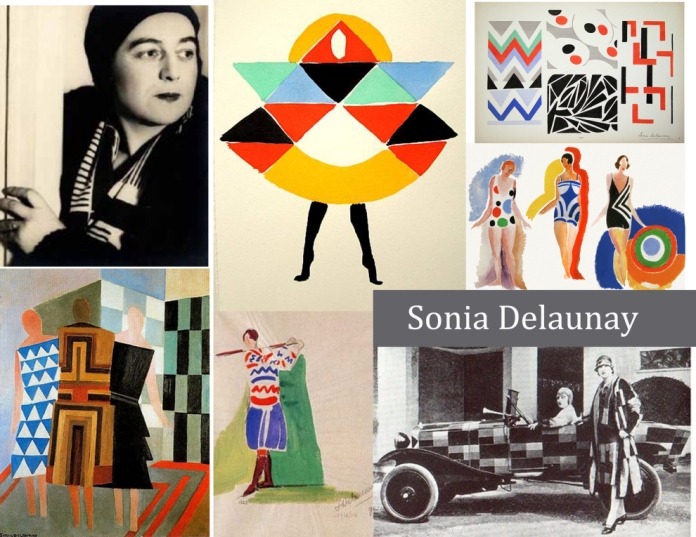
Sonia Delaunay was an abstract artist and designer who not only painted but worked in fabric and costume design, and in 1964 became the first living female artist to have a retrospective exhibition at The Louvre in Paris!

7b8e0747794bbfd304f8ea05fc0fb013

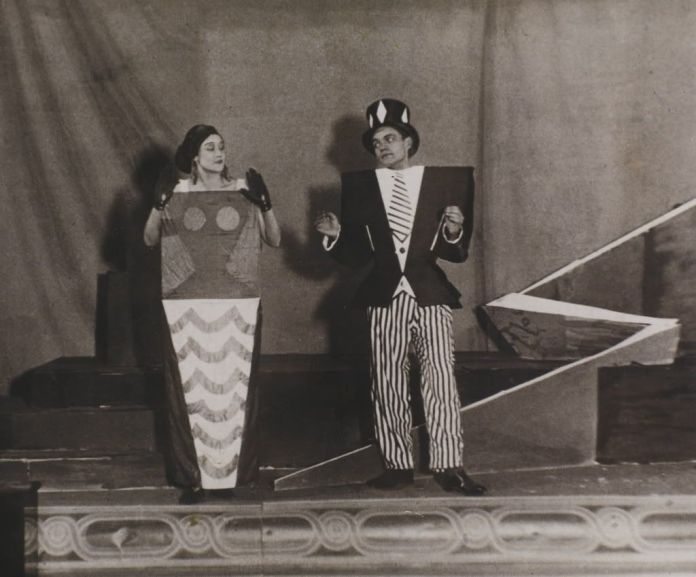
The literal geometry she brought to her most famous costume work for the play The Gas Heart by avante garde poet Tristan Tzara is just fabulous.

Saturday Night Live

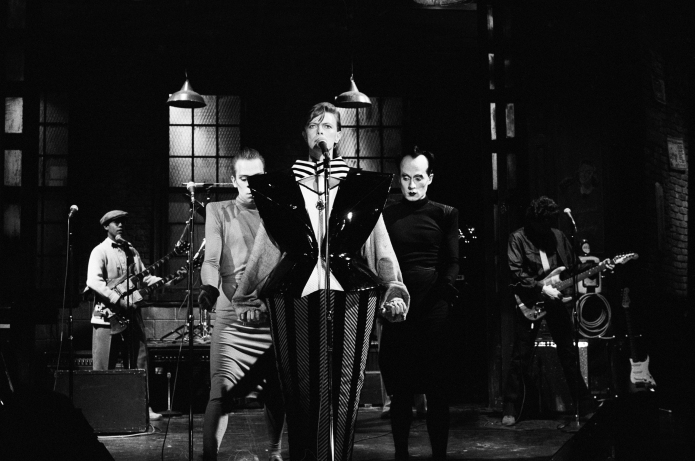
You know you’ve got a good thing going if David Bowie is on board! He wore a getup inspired by her cubist suit when he performed on Saturday Night Live in 1979.

Remembered most for her paintings, a lot of her fashion work gets glazed over which is a shame, because it is her fashion and costumes that I personally find the most interesting. Delaunay’s fashion work was revolutionary at the time because she didn’t just take her paintings and hang them on bodies… Her designs for clothing were specifically configured to work with women’s body shapes, and the clothing themselves was functionally designed for movement, not decoration. Come to think of it, this may still be considered revolutionary today! Given this, it was only fitting that our class project be something wearable. Inspired by Delaunay’s colorful, geometric art and design, my class created fabric collage necklaces.

I am all for any chance to upcycle! Discarded leather upholstery samples were cut into boomerang shapes to be used as a base for the collage bib necklaces. I pre-selected fabric for the students to choose from that meshed with the inspiration artist’s colorful, abstract style. All of my students have some form of disability, and a couple struggle with dexterity. Providing prepared shapes cut from matte board for the students to trace gave them a helpful guide to encourage project success and allow them to be able to work independently. They were also encouraged to look for shapes in the fabrics’ patterns that they could follow, as one did with a large red flower. Regular ballpoint ink pens can be used to trace the shapes on the back of the fabric. Fabric scissors were used to then cut out the shapes. Shapes were arranged on the base, and then students used a junky brush to paint tacky glue on the back of their fabric pieces and press them down. Once dry, holes were punched in the ends and jewelry chain attached and voila! Ready to wear!

Lesson planning has been so inspirational to me in my own art and handmade journey, and has pushed me to think outside of the box and come up with ideas I never would have otherwise. Creating this project inspired me to work on my own statement necklaces using not only fabric but my velvet vintage millinery florals I love to collect from ebay and local antique fairs. These necklaces are for sale in my own ebay shop for $25. More designs coming soon!

Standard
Artists To Know

Artists To Know: Black History Month

It’s been awhile since I’ve done an Artists To Know post, and I wanted to take the opportunity for February to highlight some of my favorite black artists currently working – most new, some mentioned before. Enjoy, and be inspired!

Lina Iris Viktor

lina-iris-viktor-2

Viktor is a British – Liberian artist based in New York who creates “queenly self portraits with a futuristic edge”. Everyone knows I’m a sucker for surreal, fantasy-like portraiture and after coming across the image above, I had an instant new favorite! Viktor studied film, photography, and design and uses all of these backgrounds to create her unique fantasy worlds that combine elements of painting, sculpture, photography, and performance. What makes her art so compelling to me is the contrast of seemingly opposite elements … Her works are detailed with a lot of pattern and texture to look at but the colors are kept minimal; many of the scenes she creates are contemporary or futuristic in appearance, but still contain elements of the classical. As well as a diverse study of art, she also had a diverse upbringing as far as culture, being raised in London by Liberian parents and also spending time living in Johannesburg, South Africa. Viktor aims to use her immersive scenes to convey a philosophical commentary on both a social and historical “preconception of blackness”. Her work is a category all its own.

Woodrow Nash

913b1dfcfcc3abddeeb0ffb6a59646c5

Nash is an artist from Akron, OH who works in stoneware, earthenware, terracotta, and porcelain. He is most well known for his unique bust sculptures that capture an expression, depth, and personality that I have never felt before in this type of art. He began as an illustrator, working as a fashion illustrator in New York in the mid 70s and then returning to the Midwest to do technical illustrations. Just as he uses multiple materials for his sculptures, he also employs various firing methods from pit firing, to electric, to raku (one of my personal favorites!). He calls his style “African nouveau”, because although it is influenced by African cultural aesthetic he blends in elements of art nouveau, and his sculptures tend to appeal to a wider audience beyond just those of African heritage. Each gorgeous figure he creates has a story, and they draw you in instantly.

Kehinde Wiley

If you can’t already tell, creative portraiture is my thing. I love portraits that transport the viewer to a new place of the artists’ making, where every pattern that is used is not only decorative, but an element that is used to speak to the subject’s unique psychology. I have been a fan of Wiley’s unique, powerful style of portraiture for a long time, and was excited when he was chosen to do Obama’s official portrait. Possessing a MFA from Yale, he combines contemporary figures with aesthetic elements from the past, giving his portraits a surreal, timeless feel. One of his most recent projects for the Saint Louis Art Museum featured oil paintings of black men and women dressed in their own clothing, styled for their usual everyday, posed in traditional poses from European and American art history to make a comment about under-representation. The photographic realism coupled with ornate pattern and creative approach make it no wonder his work has garnered the acclaim it has. His art is a testament to the fact that it is possible for an artist to stay true to themselves and not follow the crowd, and still be successful.

Tawny Chatmon

Picture1

A self proclaimed “army brat”, Chatmon did a lot of traveling as a kid and had resided in 3 different continents by the age of 12. Once settled in the US, she turned more in the creative direction of theater. She didn’t start getting into photography until her early 20s, when she was gifted a camera at 19 and through self teaching and experimentation saw an opportunity to make a living through the lens. After losing her father to a battle with cancer in 2010, Chatmon’s portrait photography became not only a career but a way to communicate and process emotions, an art. What first drew me to her work was the image above, part of her series titled “Deeply Embedded”. The composition and heavy use of pattern on the clothing reminded  me a bit of Gustav Klimt, one of my favorites from art history. Chatmon writes about this series on her website, “Deeply Embedded was created during a time where I continued to come across negativity centered around natural black hair & styles. Anger followed by frustration and sadness forced me to refocus that energy into creating work to speak for me as our words fell upon deaf ears.” There are many different forms of beauty in our world, and photography is the perfect medium to capture that fact.

Pierre Jean-Louis


I love art that plays with the merging of people and their environments, which is why I found this 26 year old artist’s work so inspiring. This self taught artist from New Jersey grew up in a deeply conservative religious household, but also a deeply creative one being the son of successful Haitian painter Bonaventure Jean-Louis. He moved beyond his roots with multimedia approaches, taking his inspiration from the beauty of the natural world that God has created, and with his series “Black Girl Magic”, explores specifically the beauty of natural hair. Models’ hair is transformed into forest, flowers, and galaxies, making a comment against exclusionary beauty standards.

I hope you will take the time to explore more of these artists’ amazing work. It was so hard to pick just one or two images to highlight!

Standard
Artsnacks Unboxing

February ArtSnacks Unboxing!

Hey guys! So, I was very candid about hating the end result of my ArtSnacks Challenge from last month, and this month threw me another curve ball with a medium I have consistently avoided when at all possible, even in high school and later college art classes: chalk pastels!

In my February box, I received a:

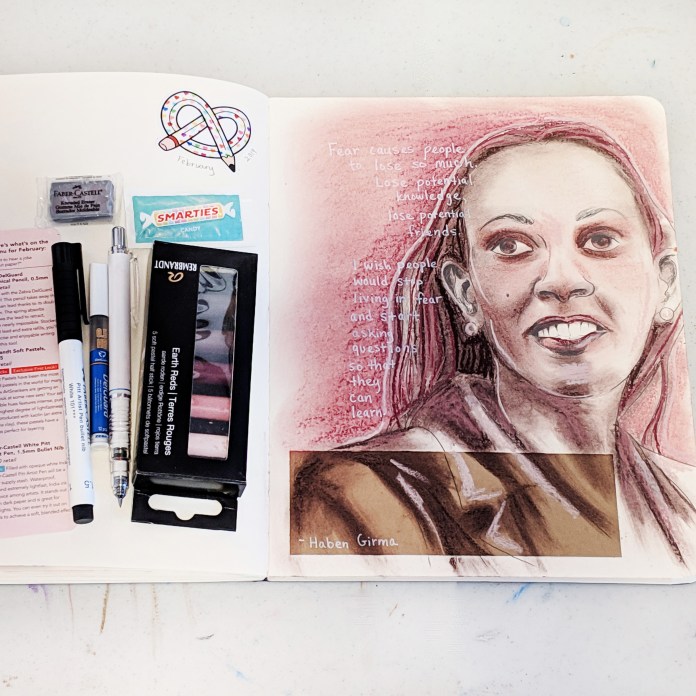
As I eluded to, I have never been a fan of pastels, charcoal, or any chalky medium mainly because I struggle to get the fine detail I want as someone who also likes to work small; I can’t keep it from getting where I don’t want while I’m working (messy, messy, messy!); and I have a weird thing where I just hate the feeling of it on my hands as well. Still, I did enjoy using these more than most. The quality is great even for one like me who doesn’t know what they’re doing as far as pastels, the colors were rich, and they did stay put on the paper much better than lower quality soft pastels. I’m going to skip ahead to the Kraft Paper, because this paired perfectly with the pastels. Comparing the feel and ease of blending on the swatch of Kraft Paper compared to the mixed media paper in my journal, there was no contest. It just goes to show that the right paper can do wonders! The brown tone really made my colors pop too, and lent such a finished, harmonious look especially with my earthtoned set.

I’ve mentioned before I almost exclusively use mechanical pencils, and the Zebra DelGuard is another nice one! I’ve never been disappointed by a mechanical pencil sent in my ArtSnacks box. The led was smooth and dark, and I love the fact that there is a built in mechanism to keep leds from breaking! Though I don’t usually use kneaded erasers most of the time, the eraser that came in my box was also quite nice and will come in handy when I am doing commission requests that are entirely in graphite.

Last but certainly not least, the artist pen that came in this box was my absolute favorite item! With white paint pens, oftentimes it takes 2 coats but this India Ink based pen had perfect coverage with one go-over. I was also shocked at how well it wrote over the pastel! The tip didn’t even get much discoloration … It hardly absorbed any of the pastel and just needed a little scribble on a scrap piece of paper to clean it off at the end. I could see how a lot of neat effects could be created with this in much of my mixed media work, and will definitely be getting more of these.

artsnacks feb 19

As mentioned, I am NOT a pastel artist by any stretch of the imagination, but I let the pencil outlining help me out and I do like this month’s result better than January’s! February being black history month, I chose to illustrate a portrait of Haben Girma with a powerful quote of hers that has stuck with me. Girma is a deaf-blind graduate of Harvard Law School, and a fierce advocate for disability rights which is an issue close to my heart, especially given that my day job is running an inclusive creative arts program open to adults with varying disabilities. I’d encourage you to read more about this amazing lady, and watch some of her talks.

“Fear causes people to lose so much. Lose potential knowledge, lose potential friends. I wish people would stop living in fear and start asking questions so that they can learn. “


Standard
Techniques and Tutorials

Blending With Watercolors – Stained Glass Ocean Project

wc blend 1

Hello! Today I want to show you a fun beginner project you can do to practice blending colors with watercolor paints and markers. If you are a complete beginner to color mixing, it is easiest to stick to either all warm colors (red, yellow, pink, orange …) or all cool colors like I did (blue, green, violet …). Some colors when blended together turn into “mud”, making a neutral like brown or gray. This is where understanding the color wheel comes in handy! For more about the color wheel, visit my earlier post Colors Aren’t Scary :). For this project, we will try out both flat brushes and round brushes. Round brushes have a teardrop shaped bristle that comes to a point at the end, and flat brushes have rectangular shaped bristles that are, well, flat on the end. Pretty easy to remember! It’s good to have a variety of sizes of each. Your brush size depends on the size of the area you are filling in. If your brush is too big, you risk getting paint where you don’t want it  but if your brush is too small, you will see all the little strokes and the paint won’t cover evenly.

wc blend 2

I started first with an outline, drawing my design in pencil on watercolor paper and then tracing over it with a waterproof black fine-liner pen (Sharpie fine points will work – You do not necessarily need a fancy art pen, though my preference when I do watercolor and ink work are these bad boys by Staedler.). You can draw your design however you want, or if you want to practice this technique without the added pressure of drawing, feel free to print this outline out and use graphite paper to transfer it right onto a piece of watercolor paper (Don’t have graphite paper on hand? Just shade over the back of your printout with a pencil, lay it on top of your watercolor paper, and trace over the lines and it will work the same way, though a bit more labor intensive.).


With watercolor, you want to start with the background and move to the foreground, and you always want to work lightest to darkest. It’s all about layering and building up colors since the paints themselves are translucent. In this more simplified project, we will be focusing just on blending this time, not layering. Still, working with the background first ensures that if any background color does find its way into the waves, which it inevitably will, we can just work right over it later and you won’t even notice by the end. Starting with the background, you want to choose a couple of colors (I used a cornflower blue and a cerulean blue.) and water them down so that they are consisting of mainly water with a small amount of pigment. Then you want to use a larger round brush and start filling in the space using circular motions. This will give our background wash a bit of texture, so that it has a hazy, cloud-like appearance rather than just flat streaks. I applied the cornflower blue on the bottom half of my sky and the cerulean on the top. Because both colors are wet, they should bleed into each other and blend together in a pretty seamless gradation. Be sure to overlap the two colors slightly where they meet. If they aren’t blending enough, you may also rinse off your brush and using the same circular motion run over the line where they touch with your damp brush to work them together further.

Color blending is one of the foundation skills of painting with watercolors, but it takes a lot of practice. Good thing you are about to get a lot of it! We did a textured blend for the background, but within an individual space inside our waves, we are now going to practice some flat blending with the goal of getting our colors to merge into as smooth of a gradation as possible. Now we are going to use a medium sized flat brush. A flat brush will be perfect for the smooth effect we need and will also be easier to keep inside the edges of our geometric shapes. You can tilt the brush so you are only using the tip rather than the whole side for narrower areas. Pick 2 different colors, and start painting one color on one end until you’ve gotten to about halfway across. Rinse your brush, and paint in another color starting on the opposite end, overlapping in the middle. A unique quality watercolor has is that when one color touches another while it is still wet, they WILL bleed into each other. In this case, that is a good thing as using wet-on-wet color with watercolors makes for some pretty low-effort, seamless blending. Still, watercolor can be finicky and things don’t always go as planned. I purposely filled the shape in so that there are darker, patchy areas and a harsh transition between the two colors. This happens sometimes, but can be easily rectified by going back over the uneven area with a damp brush. Be sure to always paint in the same direction, following the length of your shape.

Blending with watercolor markers is a similar process, but you need to be a bit more controlled with your water application so that you don’t completely lose the effect of the ink. I love watercolor markers because you can get such bold contrast, but a little bit of ink goes a long way, and with too much water your separate colors will just swim all together into one mass.  I cannot emphasize enough, quality also matters. If you get cheap markers, chances are they won’t blend nicely no matter how skillful the artist. They don’t need to be officially called “watercolor markers”, they just need to be water soluble so they will run when wet. I love using Tombow’s water soluble brush markers. You also need to think about the values of the markers you are using. Deeper colors will spread a lot farther than paler colors, and can overpower. I have started with a darker color, a royal blue, and a lighter more muted color, a sage green. Start by scribbling a bit of each color on opposite ends of your shape. You do NOT want to shade the entire area in. Again, a little bit of ink goes a long way when water is added. Then, still using a flat brush you want to dip your brush in some water, tapping off the extra on a nearby paper towel. Wet the ink on one side and work it into the middle of the shape. Rinse off your brush, and wet the ink on the other side, again working towards the middle where they will meet. The wet colors will again, flow together and seamlessly blend pretty much on their own once they meet, staying darkest where you first laid down the ink. You can see above that a gradation is apparent, but the blue has pretty much taken over as the main color you see.

Trying the process again using the same 2 colors, but shading in only a tiny bit of blue and more of the green, you can see we get a more balanced effect where the pure green color is still highly visible.


You can also create a gradation with only one color. The beauty of watercolor is the depth of value that can be captured from one single hue, simply by adjusting the amount of water added. To do this you would apply a bit of the same color on each end in a darker or medium value (mixing less water with your paint). Then, rinsing off your brush, add some water to the edge of the area of color on each side, again spreading towards the center from each end. The color will remain most saturated at the ends, and will be the lightest (most watered down) in the center.

If at any point you add too much water, your gradation is in danger of all just running together into one flat tone. If this happens, you can blot the area with a paper towel to lift the excess water (and some of the pigment), and then blend right over again. You don’t want to see any “puddles” pooling on your paper … that is a sign there is too much water being used. Also keep in mind damp is ok, but if you are filling in a new area next to an old one that is still very wet, the colors will bleed together over your lines. Sometimes it helps to use a blow-dryer to speed along the drying process. Or, you could just work on filling in areas that aren’t touching each other until each spot dries. The paint air dries pretty quick.

wc blend 1

Here is a reminder of the final image! It is the same blending process for each section, which is what makes it good practice. I filled in some spaces using the markers, and some with paint. I kept lighter colors on the crests of the waves, and alternated medium and dark tones throughout the body of water, making sure not to fill in too many of the same colors right next to each other. It always feels good to still have some sort of finished product after practicing techniques, and I guarantee you will start to see a difference in the first couple spaces you fill in versus the last! Remember, it’s all about playing with color. Have fun!
Standard