
A departure from my usual posting, but some recent complaints about art opened up the opportunity to open up a discussion about the purpose of public art, how we react and interact with it, how culture views who and what “deserves” to be immortalized, and what makes public art successful. This is especially interesting to me as I have been participating more and more in public arts myself.
Thomas Price is a British sculptor who installs over-scaled sculptures of everyday figures in public spaces, centering on black women. His intent has been quoted as “I want my sculpture to be an opportunity for people to connect emotionally with an image of someone they might not have noticed before” (emphasis added by me). This is exactly the message I got out of it when I looked at it before even reading this statement. Unfortunately, not everyone is seeing or understanding the same intent, and many are flat out losing their minds over his installations.
The blurb that encapsulates the myriad of complaints best is screenshotted below:

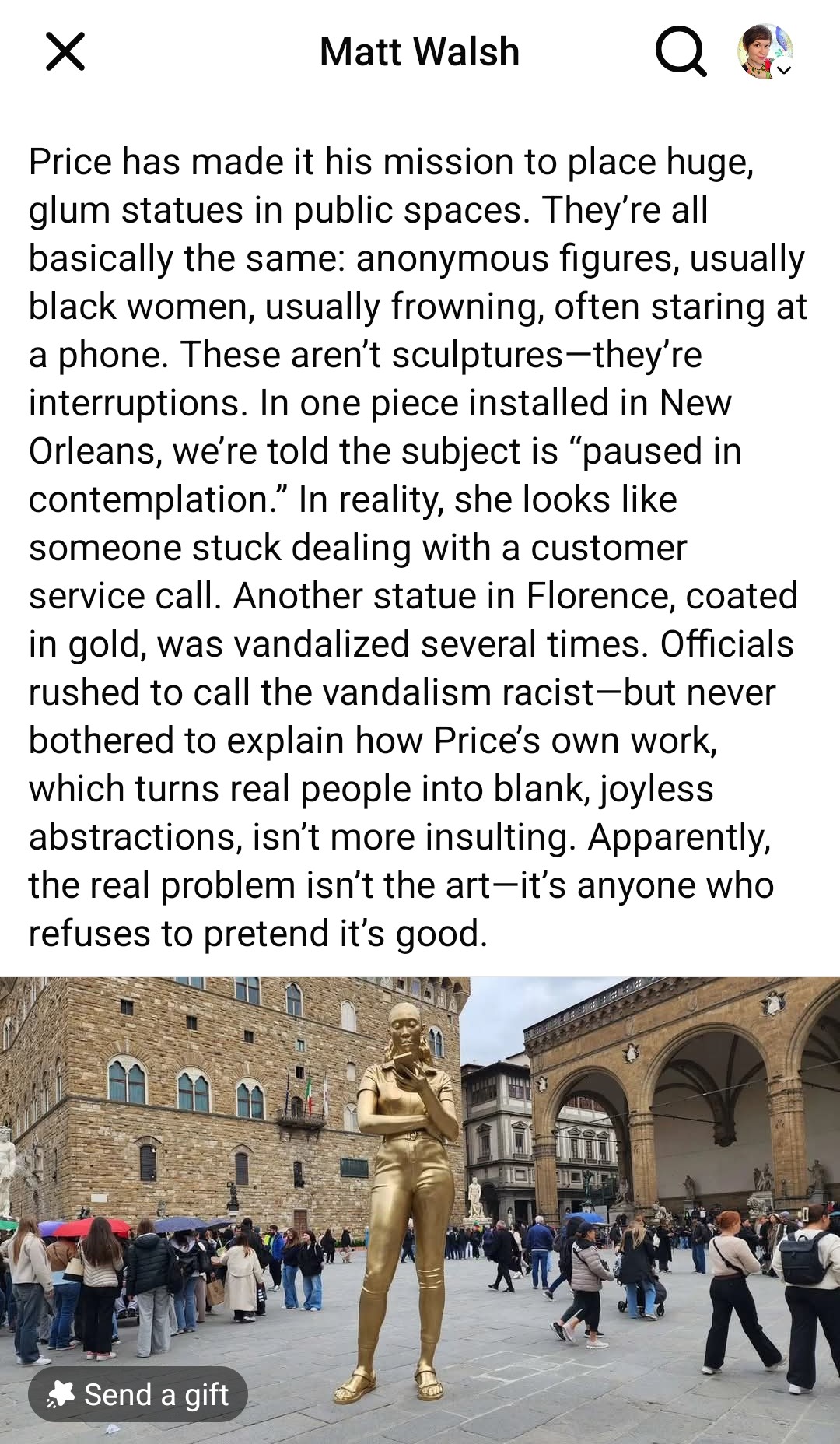
Keep in mind, this post is intended to provoke thought and discussion. In no way am I telling you that you have to like these sculptures. We all are drawn to different things, and that is perfectly fine. However, “I don’t like new things, grumble grumble, or phones, grumble grumble, or looking at art, and for God’s sake will someone tell that woman to smile!” is not a nuanced or valid critique. There’s a lot here – let’s start at the top, shall we?
One of the reasons more communities are embracing public art is precisely because it makes art accessible. It integrates art into our everyday life so that we don’t have to set aside time (and often money) to travel to a museum to experience visual arts and culture. This could become especially important as funding to museums in the US becomes uncertain. Public art promotes tourism, boosts the local economy, and fosters cooperation and communication between people of all different backgrounds, ages, and abilities. Additionally, public art specifically designed to communicate about marginalized groups, and social and community issues has been proven to boost empathy, decrease stigma towards marginalized individuals, encourage philanthropy, and also build social trust and improved residents’ perceptions of their community. I have to see plenty of things in a day about topics I’m completely uninterested in, as do we all – Advertisements, anyone? I’m not sure why this is a huge problem.

Ah, and now we get to the classic “All art made after the 1800s is bad” argument, which I’ve never quite understood. There are many paintings featured in “classical” sections of museums that are just plain poorly painted. And yes, there is also modern art that I don’t understand and that doesn’t seem skillfully done to me personally. Again, we are all drawn to different things and typically time period has nothing to do with it. Whether you like them or not, there is no question that Price’s sculptures are skillfully created. They are incredibly realistic with every hair given texture, every wrinkle in the clothing perfectly captured, accessories and objects accompanying the figure created in identical detail to life. The only difference is that classical sculpture has been around longer. Do you know why in those old Greek statues the figures are wearing robes instead of jeans? Not because it looks more “fancy”, but because that’s what they wore when those sculptures were created! Remember, there was a time when every piece of classic art was considered “modern” as well. I remember my middle school art instructor explaining that the reason so many artists draw or sculpt nudes is because it makes them timeless. Any clothing, no matter how understated, is going to eventually look awkward and date a work of art. Something tells me the people that didn’t like these golden ladies would have been even less pleased had they been unclothed, however.
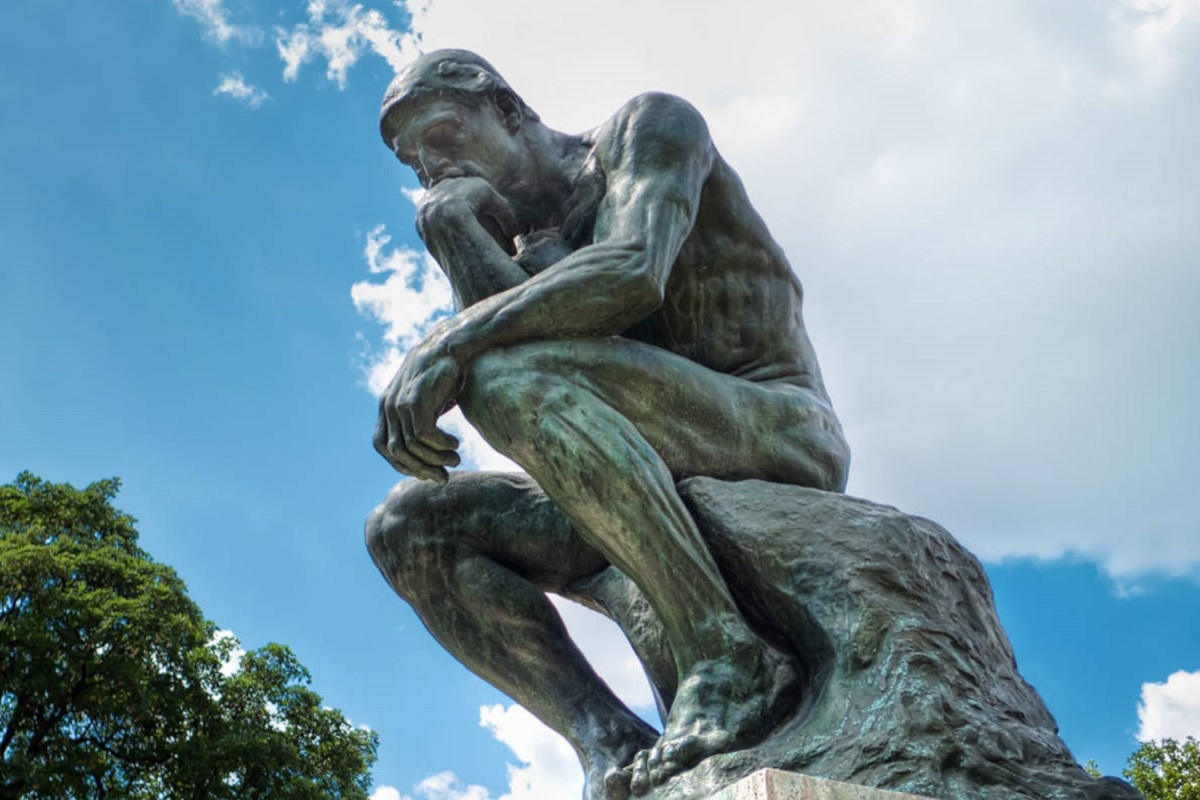
Look at this Rodin piece, art from the period when artists actually knew what they were doing! Oh wait … he looks a little, dare I say ‘gloomy’, and check out that shlumpy posture! Hm … maybe what people are telling us is the problem with these works isn’t actually the real problem.
Creating sculptures representing typical, everyday neighborhood folks and placing them throughout public spaces is not new. Even in the small communities I’ve lived in, there have been similar installations in both Midland, MI and Saginaw where I now dwell. What’s new is the accompanied outrage.

I read a study, referenced earlier, about how art that communicates about marginalized groups (or depicts figures not often seen in fine art) can inspired empathy and stronger community, but it isn’t a magic aura that is going to just radiate off of a sculpture or mural and instantly transform every single person’s heart that walks past it. It takes time, and it’s messy. One of my favorite pieces I’ve created of a young woman with down syndrome was printed on a metal sign along with many other works along a walking path in a nearby community. A Neo-Nazi group slapped a number of their promotional stickers over it – thank goodness for goo-gone. It won Best Of Show at 2 different events, and not everyone was happy about it or understood the point. Many others celebrated – You will not please everyone no matter what your field.
That being said, if a public art series is almost universally disliked by the public, then can we say it’s successful, that it is achieving it’s intended goal?
If as an artist, you are trying to reach the wider community but they don’t seem to be understanding your message then yes, sometimes it is time to go back to the drawing board and make some adjustments or try something different next time. However, if you are observing that it seems the public is determined to get your message wrong no matter what you create, it may be time to be true to yourself and persist. It’s hard, and there isn’t always a clear answer. That choice is ultimately up to the artist. We don’t have to like every piece of art we see, but remember that artists are actually human beings, and if you think you have a better idea then go pitch it! Most calls for public art in all communities are looking for ideas from everyone, whether you are an “official” exhibiting artist or not. Collaboration and communication accomplish more than complaining. I’m not saying it’s easy, but it’ll certainly leave us all a heck of a lot happier and more fulfilled.
Artists and non-artists alike, what are your thoughts on these pieces, on public art in general? Inquiring minds want to know!








 Allise Nicole's Artistic Explorations