An artist friend recently shared with me an article they wrote titled “The ABCs of Underground Art”. I really enjoyed it, and they encouraged me to write my own ABC’s of the type of art that I do as a fun journaling prompt to use to unwind and organize your thoughts. Those that have followed me for awhile know that I don’t typically stick to just one type of art, so to open up the limits I decided to make my “alphabet” the ABC’s of Creation. I have assigned a word to each letter, along with a video of my illustrating a cool little ACEO sized letter inspired visual to go with each word. Read, listen, or both – whatever works!
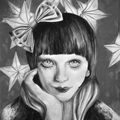
B is for Beauty. Of course, when we create something we hope others will want to look at it (or listen, or watch, or read …) Beauty means different things to everyone. The great thing about that is, there is a pretty good chance that someone out there will find your creation beautiful, even if it doesn’t fit the norm of how beauty is typically defined. 7 years ago now, I created one of my favorite pieces of a young woman with down syndrome looking joyful, confident, and gorgeous. When it was shown for the first time at an exhibit and awarded, some viewers were confused, did not approve, or were even angry. (How did I know this? I have very acute hearing and was even playfully called “elephant ears” by my parents as a kid because I heard EVERYTHING.) Though the lack of openness towards diversity in portraiture or a disdain towards people with disabilities is definitely not ok, it is ok for us to not all agree on one definition of beauty. Many more people have adored this same mixed media drawing. We each get to define what beauty is for ourselves.
If you want to see the other letters all the way to Z, be sure to subscribe!
I have really been slacking this year at keeping up the blog portion of my website. I have been posting new content on my youtube channel on a monthly basis. I usually share these here as well, but this Spring definitely got away from me as I became busy with some unexpected big projects which I will be sharing soon! For now, a fun new prompt to encourage me to keep up with posting, which hopefully you enjoy as well.
An artist friend recently shared with me an article they wrote titled “The ABCs of Underground Art”. I really enjoyed it, and they encouraged me to write my own ABC’s of the type of art that I do as a fun journaling prompt to use to unwind and organize your thoughts. Those that have followed me for awhile know that I don’t typically stick to just one type of art, so to open up the limits I decided to make my “alphabet” the ABC’s of Creation. I have assigned a word to each letter, along with a video of my illustrating a cool little ACEO sized letter inspired visual to go with each word. Read, listen, or both – whatever works!
A is for Anxiety. Though this may seem like a negative way to start my ABC’s of Creation, it really isn’t. Creativity is essential to me as a tool for anxiety relief and general well being. No matter what I am doing be it lesson examples, youtube demos, commissions, or art just for me I am lucky that it all affects me in the same profoundly positive way. I know it isn’t that way for everyone, and I am so grateful that any type of creating, even when it is ‘just a job’, doesn’t feel arduous to me but instead is life giving. When I start to get this feeling of agitation like even my very skin is uncomfortable and just on too tight, I know that if I take a pause and go create something I will be ok. Creativity brings a sense of relief and reprieve, and refills my battery.
If you want to continue watching the other letters in this series all the way to Z, be sure to subscribe!
I’ll be honest, I do digital art when I have to for some logo commissions and such but I love traditional art, and I love traditional animation. I once had an art student who was very into Disney, and they would bring in printouts of digitally remastered screenshots and point out all the errors, circling them in red pen on one copy and then drawing over a 2nd copy to fix the colors, textures, etc. and restore them closer to the original, thus “fixing” it. That was their relaxing art therapy – and you know, I get it. That being said anyone who knows me can guess ahead of time I’m probably not going to be into AI visuals. Whether you like the look of AI art, or find it to be a soulless disaster, the fact of the matter is there are some questionable ways AI is trained to create “art” that definitely looks like stealing from other artists unless you are using the programs just as an idea generator or a “base” which you then digitally draw on top of and make your own.
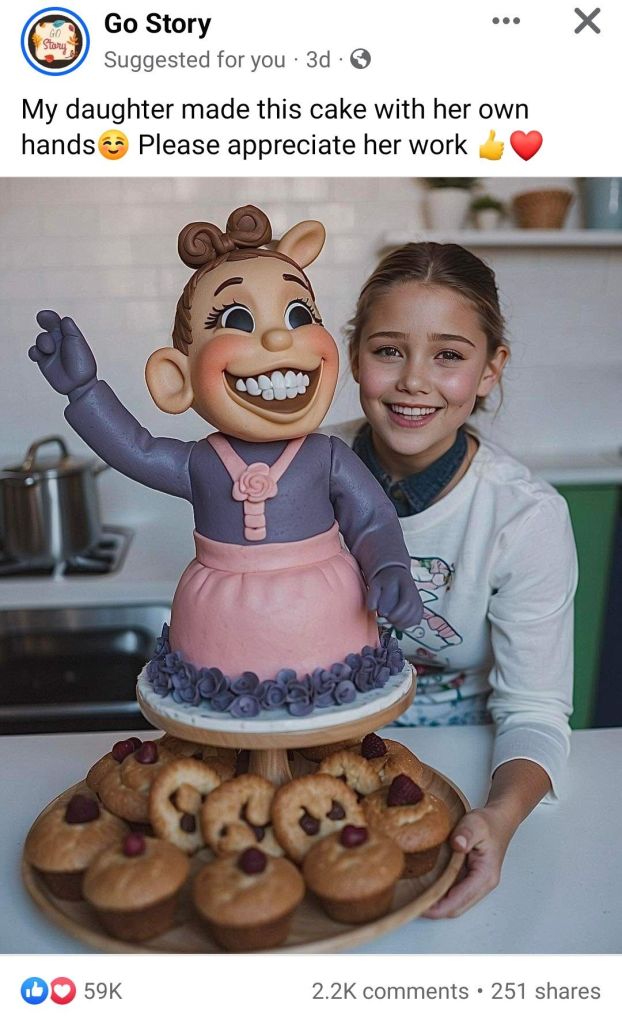
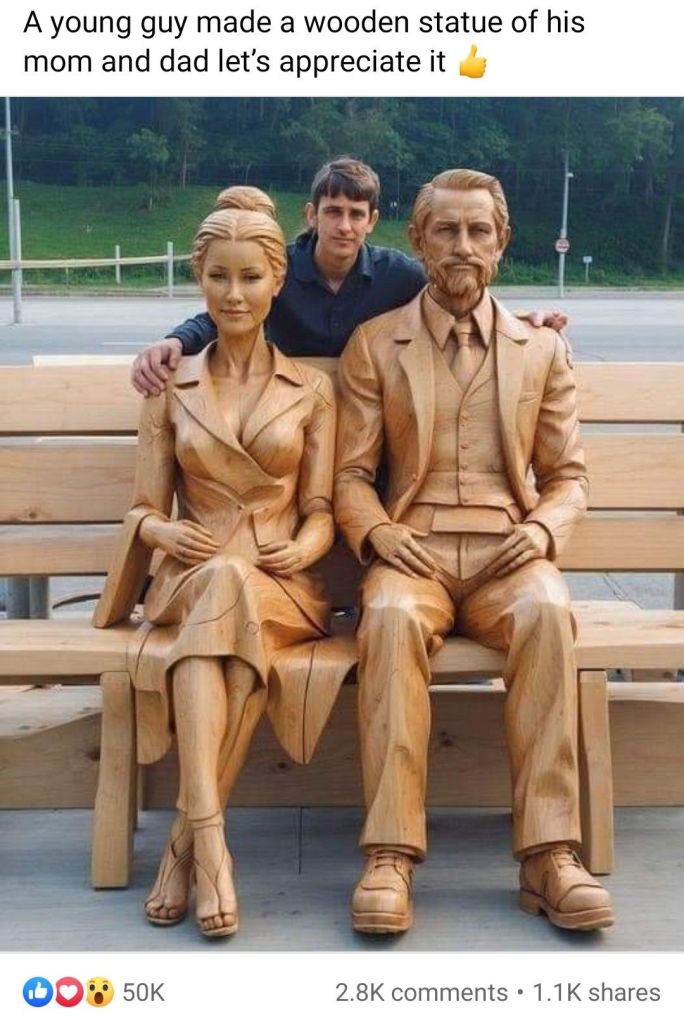
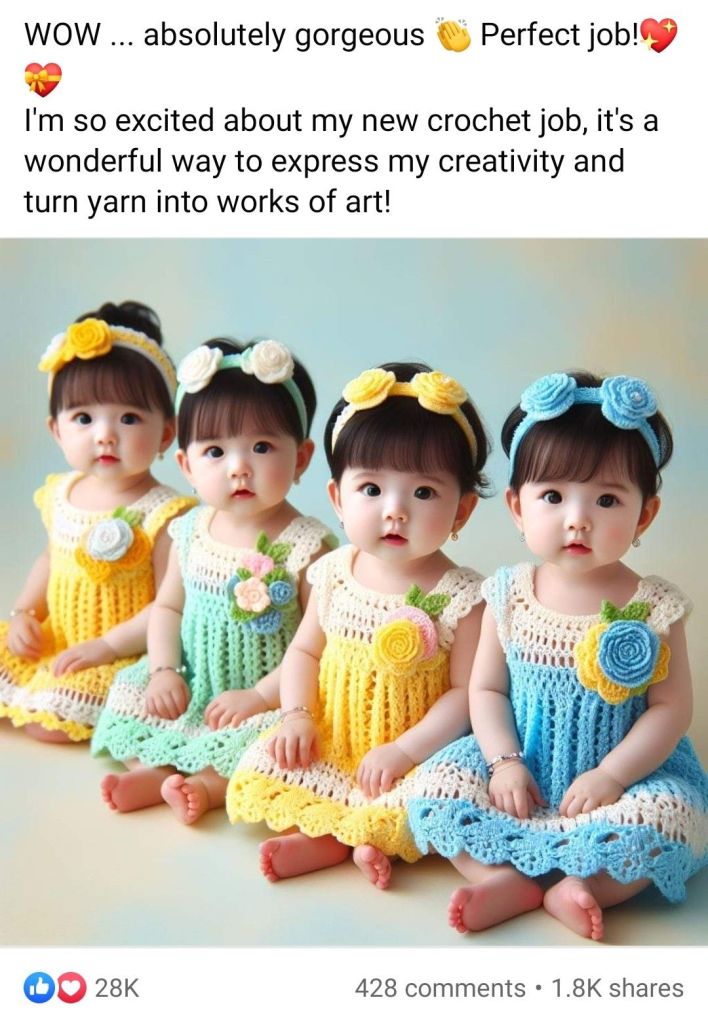
The other concern which should be valid whether you enjoy AI or not is the fact that there are many people that already, even with AI generated images still in their wonky stage, cannot tell when something isn’t real. This could be problematic where things like news and current events are concerned, and AI has already been used to make fake photos of celebrities. I can typically tell pretty easily as I’m a highly detailed, visual thinking person. For those who have a more difficult time discerning, some suggestions I’d start with as far as what to look for are:
“Snapchat Filter Face” – Everything is unrealistically smooth with a “glow” that doesn’t seem to be coming from any light source. Eyes often look like they are plastic, and seem glazed and overly glossy.
Bizarre details such as clothing that doesn’t make sense (a floating collar above a scoop neck T-shirt for example), nonsensical background details such as a home kitchen with 3 ovens instead of cupboards and counter space, misspelled words, objects that don’t belong in the context of the scene, things that are out of proportion scale wise.
Lack of clarity – Disappearing edges or fogginess in the background, and conflicting light sources.
I think people escaping into AI also bothers me because it is just such a poor substitute for the real thing, and we could have the real thing! We could have good design. We could have fun, joy, and whimsy in the spaces we live and work in. We have in the past. We’d rather play house with imaginary designs of rainbow colored kitchens or striking gothic black and eggplant living rooms than actually utilize engaging design in the spaces we inhabit. We can make anything we want to live in, and white and beige boxes are really it? (I studied interior design in college, and am NOT practicing for many of these reasons, so I’m extra salty about this particular AI vein). Similarly, we can learn to bake, crochet and sculpt, and it’s a lot more satisfying for the soul than pressing a button. I resent the fact that AI is making creativity blasé.
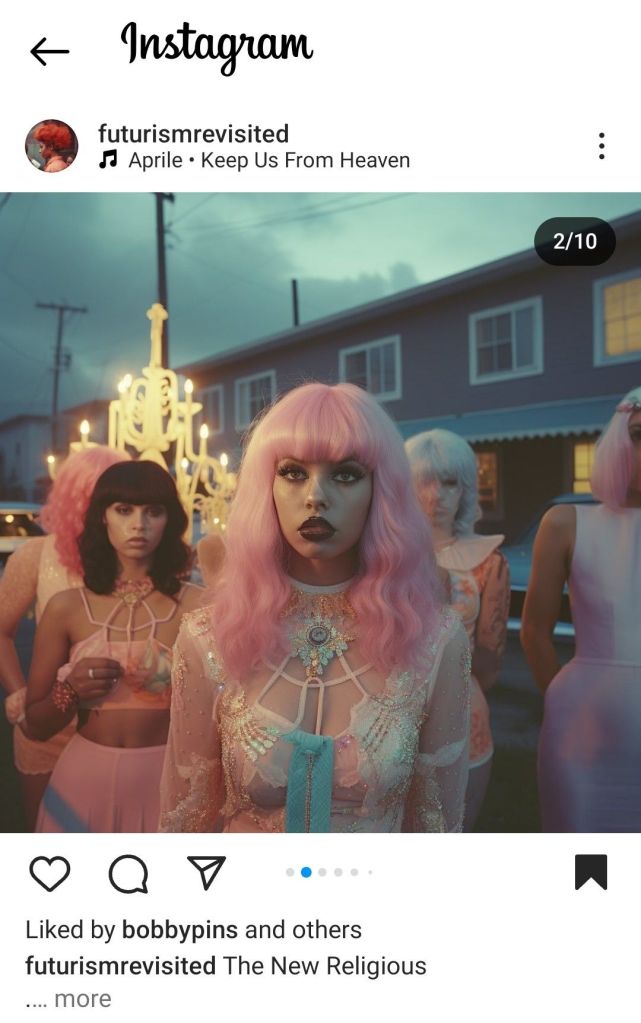
AI looks like a dream because of the missing details, skewed text and numerals, hazy edges, ambiguity, and even the nonsense. You’d think I’d love it as I’ve always been into surrealism and dream inspired media. I do love the below images (the creator openly expressed that Midjourney was used, which I appreciate. ).
Still, the human mind is an important element that’s missing. A big part of surrealism is psychology, opening your mind to the unconscious, and freeing oneself of social standards and social norms. AI is the exact opposite. It trains on immense amounts of existing images as well as popular opinion based ratings, making it a culmination of what is trendy, and often stereotypical. There is something to be said for using art to show us something we can’t see in real life as a means of visually communicating a real life emotion, struggle, or life experience. (Left, some of my works in progress. Right, one of my favorites from Remidios Varo, ‘Woman Leaving The Psychoanalyst’.)
AI does create some interesting opportunities for allowing those with dexterity issues from injury or disability to create visual art. Of course, I think of my students with disabilities that I teach on a weekly basis that work with these issues to still create handmade visual art just in a completely different way, and have to wonder if that isn’t still more satisfying. We actually have a 3D printer and I can’t get them to touch it! They want to get their hands in the paint and pastels.
Technology can be a great tool to help us innovate. In my opinion, it’s not being used well if it creates more sameness and overwrites creativity.
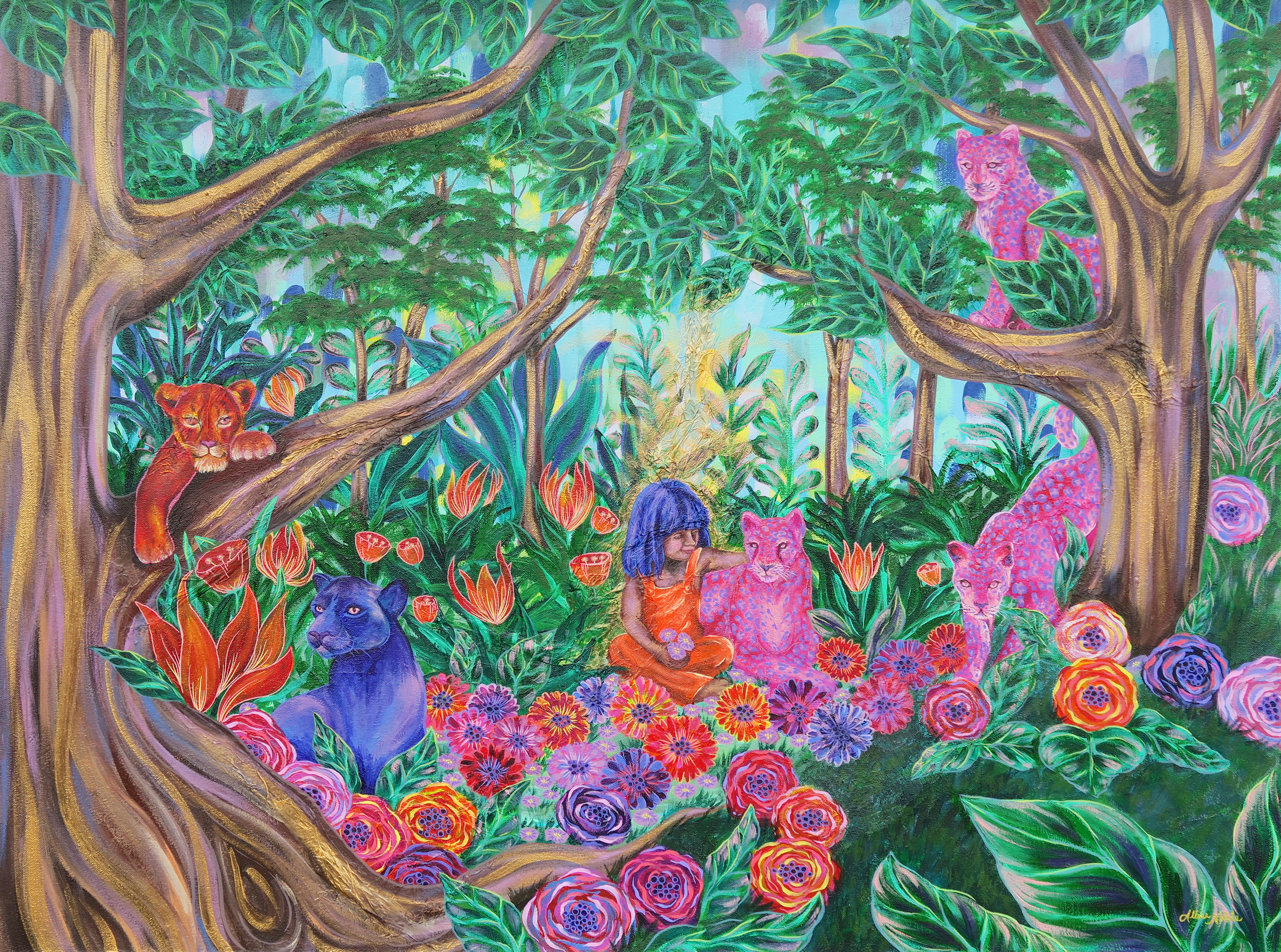
I had the opportunity end of last year to create a largescale piece of art for an animal themed show at one of the galleries where I teach. When the call was made, I already had a canvas prepped and had been planning to do something centered around a jungle scene anyway. I decided to take the original idea further and come up with a concept that would fit the upcoming exhibit. From the beginning I’d wanted to represent all of my “big cats” in the jungle scene as female, and have the piece exude an essence of feminine strength, power, and courage. In the end, I had a lot of trouble coming up with a title when suddenly the word “Belonging” popped into my head and just wouldn’t leave.
So, I ended 2023 completing a piece about strength and courage, and in the first half of 2024 I had two people lend me the same book within the same week, The Gifts Of Imperfection by Brene Brown. I supposed that meant I should probably read it! Within the first 30 pages, I learned the important fact that I am actually courageous, a quality I may see in the characters in my art but that was never, ever a word I would have thought to apply to myself. The introductory chapter explains the root of the word courage in the original latin as deriving from cor, meaning heart – courage originally meant ‘to speak one’s mind by telling one’s heart’. As the chapter went on to delve deeper into that concept, I came to the realization that I have been courageous all along and just didn’t know it because I was defining courage by cinema standards.
I have often joked with people that I don’t do small talk, I only do big talk. I love being around people, but I have anxiety and some sensory issues (the main reason why I never thought the word courageous could ever apply to me by default), and so my social reserves get depleted quicker than maybe the average person. I need regular intervals of alone time to recharge. I’m not going to waste my precious reserve talking about whether it’s sunny or cloudy outside when you could just look out the window or stick your hand out the door and feel it. I don’t feel like describing the minutia of what I did all day, or answering any questions that only require one word like “fine”. I’m not opposed to being friendly and polite, but for the most part I don’t understand spending energy in conversation that adds nothing edifying to either person’s life. At times, this tendency has backfired. Some people don’t want to hear about the interesting dream you had last night and what you think it means, or to be asked what was the most fascinating thing they’ve thought about today, what was the most surprising thing they’ve seen this week – and that’s ok. Some people are uncomfortable hearing about anything that isn’t sunshine and rainbows, and seeing the raw emotions of the people around them. That’s where the courage part comes in I suppose, going deeper you risk rejection and ridicule.
I am an open book and always have been. I honestly think I don’t know how to be un-authentic so I don’t always even have a choice, it’s just how I work! Over the last 5 years especially I have been candid with people in my life about the inevitable beauty of life, and the accompanying chaos. Through virtual communication like this and other means I’ve shared my experiences even with those I don’t know that well. I don’t shy away from letting others know how I am doing, including when I am struggling. I have been open and honest about what I need when I’m not getting it, about the tough choices I’ve made that everyone might not like, about how my relationships are going. I’ve learned to be mindful, and to allow my openness to be paired with purpose and deliberation after some communication missteps. At the end of the day though, my sharing something uncomfortable that I’ve experienced can help others going through similar things, and also open the eyes of people who may never have given that experience a thought so that they can look at situations around them with compassion and curiosity, not judgement and condemnation. Reaching out and saying, I am struggling because I have been working so hard and still don’t feel like I belong anywhere is the only way there will be any hope of someone else reaching back and saying, ‘hey, I may know a place where you would!’.
I believe that is why that word “Belonging” was stuck in my mind after I stepped back and looked at my finished painting. I don’t think you can make a true connection with anyone if you aren’t willing to show all the parts of you. Belonging takes courage.
At the opening reception, a fellow artist came up to me and shared that her child had looked at my painting and said ‘That girl looks like she would play with me’. Sometimes our art knows what it wants to say before we do.
2023 was overall a fantastic year filled with enriching experiences, but the last quarter, typically my favorite part of each year, definitely roundhouse kicked me in the behind. I ended the year with pretty debilitating burnout, and was already begrudgingly dreading the middle-to-end of the NEXT year because, why would it be any different? I’m sitting here like a big dummy changing absolutely nothing about the major pillars of my life.
We hear time and time again that the definition of insanity is doing the same thing over and over and expecting different results. A fear of stagnation is drilled into us, and especially in this day and age we are expected to always be doing something new. People that don’t like change or enjoy a particular routine are looked at as dull and uninspiring, lacking in aspiration. We are told if we get tired of something, or a particular job, relationship, etc. isn’t serving us then just drop everything and start over, and often face judgement if we don’t. Everyone sees the big changes, but no one notices those subtle, butterfly effect changes that can make a huge difference without completely blowing up your life (Disclaimer: Sometimes you do need to start over, trust me, I’ve been there. But not always…) I propose a little bit of advocacy for consistency, and sticking around long enough to get to the breakthrough.
This was a year of growth for me: growth in closeness to my family and friends both new and old; growth with my partner as we both became better versions of ourselves individually, and learned how to mesh these individual identities into a shared life; and growth in my career as the first year I worked as an independent artist. Growth is not linear. Not everything worked well. There was a lot of joy as I packed more different experiences than I’ve had in the last 5 years into one, but also a lot of tears. Much of 2023 was one big learning experience.
I grew my online business, took part in public arts projects, lead an art restoration project, taught art to just about every age and ability level in 5 different cities, and finally refurbished my unfinished basement and created an official home studio.
Some things I learned in my first year as an independent artist are:
Teaching is a key component for job stability as a traditional artist. I’ve seen other independent artists that are graphic designers make logos and web design their main base, but as a creator who only dabbles in the more techy stuff, teaching at local arts non-profits has been a consistent base especially once word of mouth spreads via happy students. Being involved as a contractor at larger organizations rather than only trying to teach private lessons or workshops independently has the added benefit of opening the door to other opportunities once that organization learns your skillset.
Be choosy about market venues. When it comes to in person art markets and festivals, I had been taking the approach of best value and high quantity. I ended up getting super burnt out as it’s no secret markets are a lot of work, and so many of the “Amazing, this venue is only charging 20 bucks to set up!” opportunities were completely dead with no customers. All those small charges could have added up to funds to afford the gas and booth fee for an out of town venue in a more populated, high traffic area for example. In 2024 I will be focusing on larger, more established markets, but maybe doing less than 5 per year rather than one every couple weeks. When it comes down to it, today I think in person sales are more about getting your face out there and talking to people about your brand than making a huge amount of money.
Your social tribe isn’t necessarily the same demographic as your customers. This is something really interesting I’ve discovered through my own record keeping and observations. I do a lot of upcycled clothing. Overwhelmingly, the women who buy my clothing are women 2-3+ decades older than me that enjoy having artsy statement pieces as a part of their everyday wardrobe. My juniors painted and fabric collage garments on the other hand take forever to move. Similarly, when I set up my art prints and mixed media work for sale at venues that are places I’d actually hang out (a punk rock music festival for example) I sold almost nothing, but when I set up at events that attracted a lot of customers that were actually quite different from me and my typical friend group, I surprisingly sold well! It is advantageous to pay attention to who is most excited about your work, and see if there are any common threads.
Take control of your schedule, and be intentional. One of the main reasons I wanted to go independent was to get a better handle on my anxiety level. I have always had an incredibly difficult time with not knowing exactly what my schedule will look like way ahead, or the idea of my day to day routine being controlled by someone else – that’s a big anxiety trigger for me, and though I’ve tried to work around it at the end of the day it’s just how my brain works. I was tempted to jam in every opportunity possible all over the place because realistically, sometimes things don’t run and I didn’t want to come up empty handed. I ended up with an erratic schedule that if a boss had handed to me, I’d have been really angry with them – but it was me who had done it to myself! Dealing with work that is not necessarily “guaranteed” can be nerve-wracking because, well, survival. Now that I have been able to observe what usually always ends up pulling through and what pursuits are a bit more of a wildcard, I can allow myself to say no to some things so that I can include other important things in my life besides just work.
Become familiar and comfortable with ups and downs. As implied, there will be times when everything is coming together and it’s one big achievement after the other, and times when things are really slow. It’s like this for any independent or commission based job, and you have to just expect it to happen and plan/budget accordingly to the best of your ability.
Resist marrying your value and identity to your job. This has been difficult for me anyway as discussed in a previous post. It is especially challenging for those that are in a creative field because so much of what we put out into the world through our craft is very personal. However, this tie is dangerous because during those times when work slows down or a project you were excited about gets delayed, etc. you end up taking it personally and feeling like you are a bad person or have a bad life, and it can color absolutely everything. A small or medium size setback becomes insurmountable. I love what I do and am passionate about it, but it is no longer the most important facet of my existence and that is normal and healthy.
I always do a small project for the new year inspired by the new Pantone Color Of The Year. This year’s was Peach Fuzz, which is honestly not my favorite. However, the soft, neutral orange color was perfect to add a warm glow to some watercolor winter scenes.
I hope you enjoy the quick demo, and have a wonderful start to the new year. Other working creatives out there, what are some things that you learned in 2023?
Some spicy discussions are happening about what classifies as an actual disability, and when accommodations are reasonable just as we’ve tied up Disability Pride Month after a video of a distraught young woman shared an unpleasant job interview experience. She was allegedly yelled at by the interviewer after being asked if there would be leniency and accommodation for her time blindness. Being tossed around are accusations of faking disability when one is really just lazy, “this never used to be a problem!”, comments of how this younger generation has no resilience or willpower, and more.
I’ve worked with individuals with disabilities for over a decade now, and I can say that time blindness can be a very real thing. It is often a symptom of ADHD (though, nothing is across the board – I also know people with ADHD that are early for everything!). It is fair to say we are seeing more cases of ADHD now, which is why this and other issues may seem more common. Whether that can be linked to the different way we interface with technology compared to the past, diet, the fact that are school system is built upon making children sit in one room and listen to someone talk for 6+ hours, or other factors I’m not going to get into because I’m not an expert so what I have to say would mostly be speculation. I also think it’s fair to say we as a society are struggling with resiliency, but I’d also argue life has become exceedingly more complicated, and resiliency is really a moot point when your brain just won’t cooperate with you on a given task. I’ve had employees work under me who I would legitimately have to remind on a weekly basis when they were to come in to teach their class, even though they taught at 2:00 on Tuesday for example, the same time every week for 4 months. At first I thought they were putting me on, until I realized they honestly couldn’t get a handle on remembering their schedule, even sometimes after writing it down.
I have my own “stuff” as we all do, and I can tell you there is nothing more infuriating and painful than repeatedly being told you’d be better at something if you’d only try, when you have poured every fiber of energy you have into trying only to see no improvement. I have a funny little thing that is referred to in layman’s terms as “location blindness”. What’s interesting is, usually people that have this acquired it due to traumatic brain injury, but I just got lucky and have always been like this. I have the complete inability to retain directional information or orient myself in space. I have always had an above-excellent visual memory, so it isn’t like I don’t remember what different places look like, I just can’t fit the puzzle pieces together. It’s all details, no big picture. I have to use GPS to get to the same grocery store I’ve used in town for the past 10 years. When I was first learning to drive, I noticed things just weren’t clicking into place as I’d assumed they would, so I would study directions to places I frequent like one would study for an exam. It did absolutely nothing for this almost straight A student … I still couldn’t tell you how to get from point A to point B. If I get up in a restaurant to go to the bathroom, I have to very deliberately focus on the exact turns “right, left, right again…” that I made as I left my seat and repeat them in my head the whole time like a mantra or I won’t find my seat again, which is always super embarrassing. I recall asking my doctor about it and her saying though the degree to which I seem to have trouble is not as common, it’s not dangerous just wildly inconvenient.
Another struggle that’s a bit less important, wheels and I are not friends. I just barely learned to ride a bike without training wheels before junior high, and I never learned to roller-skate or rollerblade. I made renewed attempts during COVID lockdown when I had copious amounts of time on my hands, and made 0% progress sadly. I recall countless roller arena end of the school year parties growing up, because 90s kid, where I was sitting on the sidelines trying to look like I was having fun and well meaning adults would come up to me and say, “Well I feel bad that you’re sitting here by yourself, but we all make choices about what we want to spend time practicing …” If looks could kill, well …
Oftentimes I wonder if these two funny little mental blocks are related, as both seem to have to do with orientating oneself in space, one physically the other mentally. Who knows … The whole point of these odd little tales is to illustrate the fact that sometimes our brain just says “NO, I WILL NOT,” when it comes to certain things. It’s more difficult when the things our brain refuses to do are common skills that it seems like the majority of others have no problem with. Most people that don’t understand a mental block or question its validity aren’t actually trying to be jerks, they just honestly don’t know what they don’t know. And yes, it’s ok to ask for accommodations and sometimes it will be necessary. However, when we can come up with tools and tricks for ourselves to get around our brain’s refusal it’s not just about pleasing other people. Doing this will also make our own life way easier and less stressful. For my location blindness, aside from using GPS I can when possible check out new locations ahead of time if I have to be there for something important, and leave early enough to accommodate for directional errors or unforeseen circumstances like construction that may throw off my route. Saying “Well, I guess someone has to drive me everywhere because I can’t do this” would only hurt myself and my ability to have a life at all and enjoy opportunities both professionally and for my own pleasure. With time blindness, alarms and reminders can be set to assist with being ready. Even if you have to set 15 alarms before work in the morning, one for waking up one for brushing your teeth, another when it’s time to make breakfast, and so on to dictate the schedule of your whole morning routine… do what helps no matter how silly it may seem to other people. Conversely, when someone shares that they are struggling with something, believe them. There’s not really any logical motivation for faking a difficulty when of course we’d all prefer that everything came easy to us.
I had the wonderful opportunity to lead a community mural in Madison Heights for their ADA Pride Celebration the end of last month, the prompt being “If the inside of your mind were a physical place, what would it look like?” This concept really connects well to these thoughts I’ve just discussed … We don’t know what the landscape of each other’s minds looks like, so listening before assuming is always best.
I will be part of a show at Creative 360‘s satellite location in downtown Midland opening mid this month that celebrates neurodiverse creators and creators with disabilities, so if you are in the area be sure to visit!
What is a struggle you have that you wish there was more understanding about? Let me know in the comments.
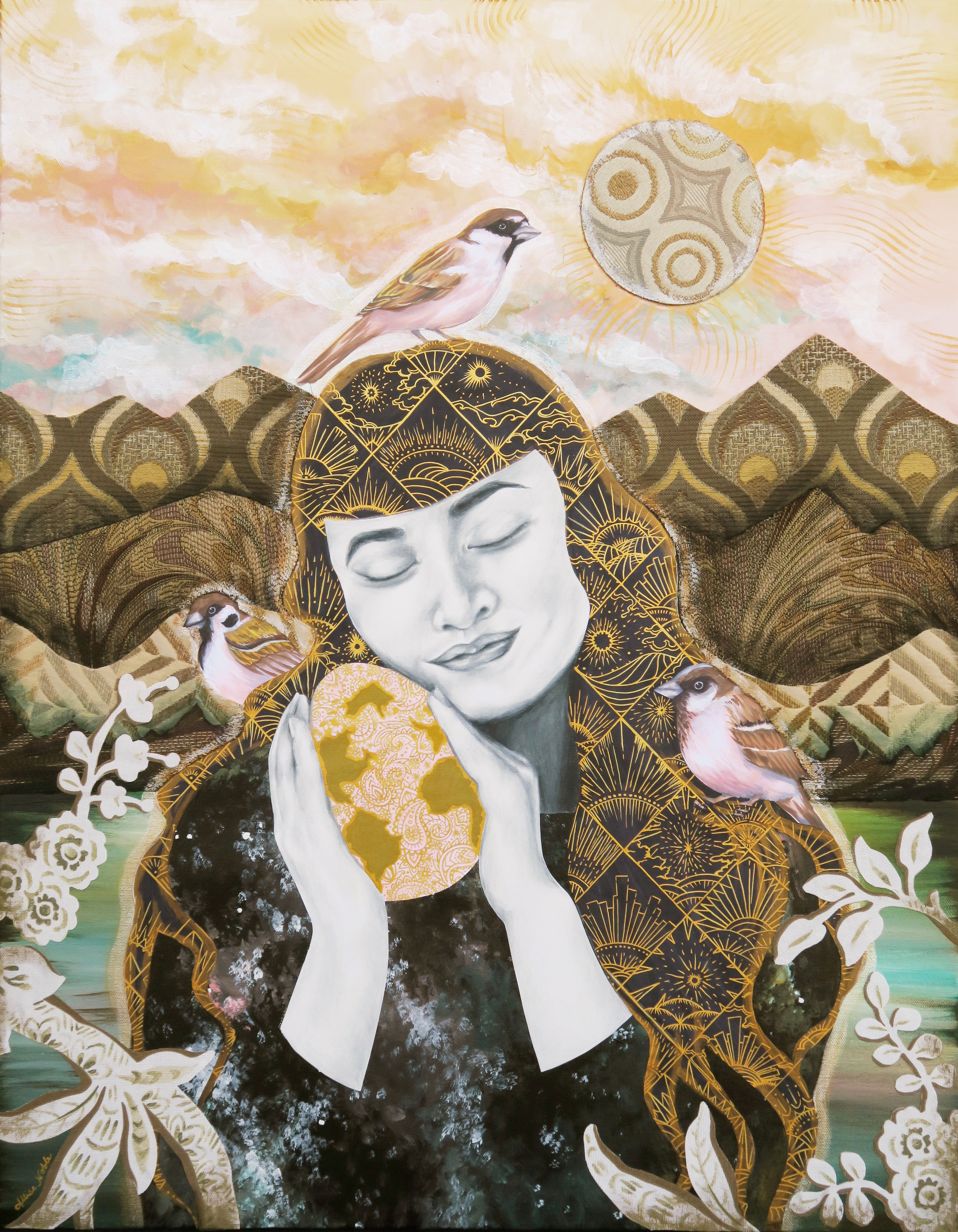
A year later, I have finished the second installment of my Fruits Of The Spirit series, Gentleness. (Visit this link to view my first, Peace.) I certainly don’t plan to take an year to get to each installment of this 10 part series, but I spent 2022 dipping my toe into a lot of new things career-wise, and ultimately deciding what my personal goals were and how I wanted to go forward. I was also focused a lot on teaching art and developing curricula, which helped propel what I’m doing this year forward. Having time once again to revisit my own personal art has been like going on an exciting vacation, and I think I like this 2nd installment even better than my first! Below is a video in which I give some extra background on my thoughts behind this piece and the series itself.
Ever in love with mixed media, I used colored pencil for the face and hands, acrylic for the torso, sky, and water, ink for the birds and egg, and fabric for the mountains, sun, and flowers. The face, hands, egg, and bird were all one piece on mixed media paper. I finished this first, then cut it out and traced it where I wanted it on my canvas. Next I painted all the acrylic straight on the canvas. Once the acrylic was dry, I glued the paper piece down, and following that I used tracing paper to create patterns for all my fabric pieces and glued those on last. Gluing the paper especially is really a ‘trust the process’ moment. Even though I have done mixed media work like this so many times now, I always get nervous adhering the paper bits to canvas because there is a period while it is drying that it looks VERY wavy. It inevitably settles down once it dries, but that doesn’t help my nerves! For any artists out there looking to adhere paper drawings to canvas, I’ve found Aleen’s Tacky Glue works best after trying various super glues, Elmer’s, mod podge, special paper adhesive for scrapbooking, clear sealing mediums … After gluing I lay the canvas face down on a piece of vellum paper (to prevent sticking if any of the glue seeps out from the edges), and set heavy flat objects like books, boxes, etc. inside the frame to keep it pressed overnight. I use mixed media paper because it is a great base for any drawing medium and can even withstand a moderate amount of wetness, an important quality since I know glue will be involved.
I have started my 3rd part of this series already, and will try to be better about taking video throughout the process this time. Follow me for more updates as I go forward on this series, and I’m sure some other projects in between :).
Happy Spring, a time of new beginnings and new art! I had been working on this 3’x3′ piece since the beginning of the year, inspired by a photograph I took at the Japanese Cultural Center in town when I first moved to Saginaw. I used both metallic and traditional acrylics and fabric. Like my other mixed media landscapes, I chose colors that captured what I feel within the place I am painting, not necessarily the true colors from nature.
Most of my art is very heavy in symbolism and story. Those pieces are invigorating to work on, but every so often I need to draw or paint something where the process is more relaxing, and simply celebrates one of my happy places.
2023 has been all about finding my happiest places, not just physically but mentally as well. I had a series of consecutive high stress years that I didn’t even fully recognize as such until I reached severe, shutdown level burnout. I don’t think even the closest people in my life aside from my parents know how truly bad it got. Part of this stress was circumstantial and completely out of my control, but some of it came from the fact that I was trying to make certain parts of my life fit together that were just never going to, like that toy we give to toddlers where they have to fit the different shaped plastic pieces into the corresponding holes. No matter how long they try to push a moon shape into a star opening, it is not going to fit. One of the most valuable things I took away from therapy over the last 3 years was “Don’t live in the land of shoulds”. I had a constant internal dialogue of guilt and shame going, “___ shouldn’t bother me, I shouldn’t be so tired, I shouldn’t be getting overwhelmed, I should have ___ by now, I shouldn’t react like ___ …” There is really not much point ruminating over what should or shouldn’t be, because reality still exists and that energy is better spent doing what we can to change what we don’t like about it rather than chastising ourselves for how we are wired.
Starting in January, I made the big scary decision to make a career transition to entirely contracted and freelance work focusing mainly on different avenues of teaching, as well as other art and design related services. I read a short blurb I happened upon while scrolling before bed the other night that said we as humans basically operate under the assumption that everything is supposed to suck (“work isn’t supposed to be fun!” “life is hard!” “everyone is tired!” “no one gets to do what they want!”), but who decided that? Is this really the best way?
Don’t ever accept a life devoid of joy, but don’t run from struggle either. Yes, life is hard but we get to choose what kind of hard. Not in all circumstances but in many, we get to pick the “hard” that we want to deal with. I made a lot of pretty serious changes around how I spend my time this year, not only with the career switch but in the way I spend time socially as well. I’m an introvert/extrovert blend for sure but I do get some serious communication fatigue. I am no longer giving time to people out of feelings of obligation, and I am no longer wasting time on outings I’m not interested in just to please others. Never fear, I have actually not become a hermit! I still go out and do fun things and socialize, but I have a lot more energy and am a lot less stressed now when I choose to do so. These changes aren’t magic, things are still hard, but it is the right type of hard (for me) and that makes all the difference.
I love teaching in person, but not everyone that wants to learn some of my techniques lives in an area where this is possible so I am open to teaching private or group lessons virtually! If this is of interest, don’t hesitate to reach out.
What changes have you made lately that made you feel more joyful?










 Allise Nicole's Artistic Explorations