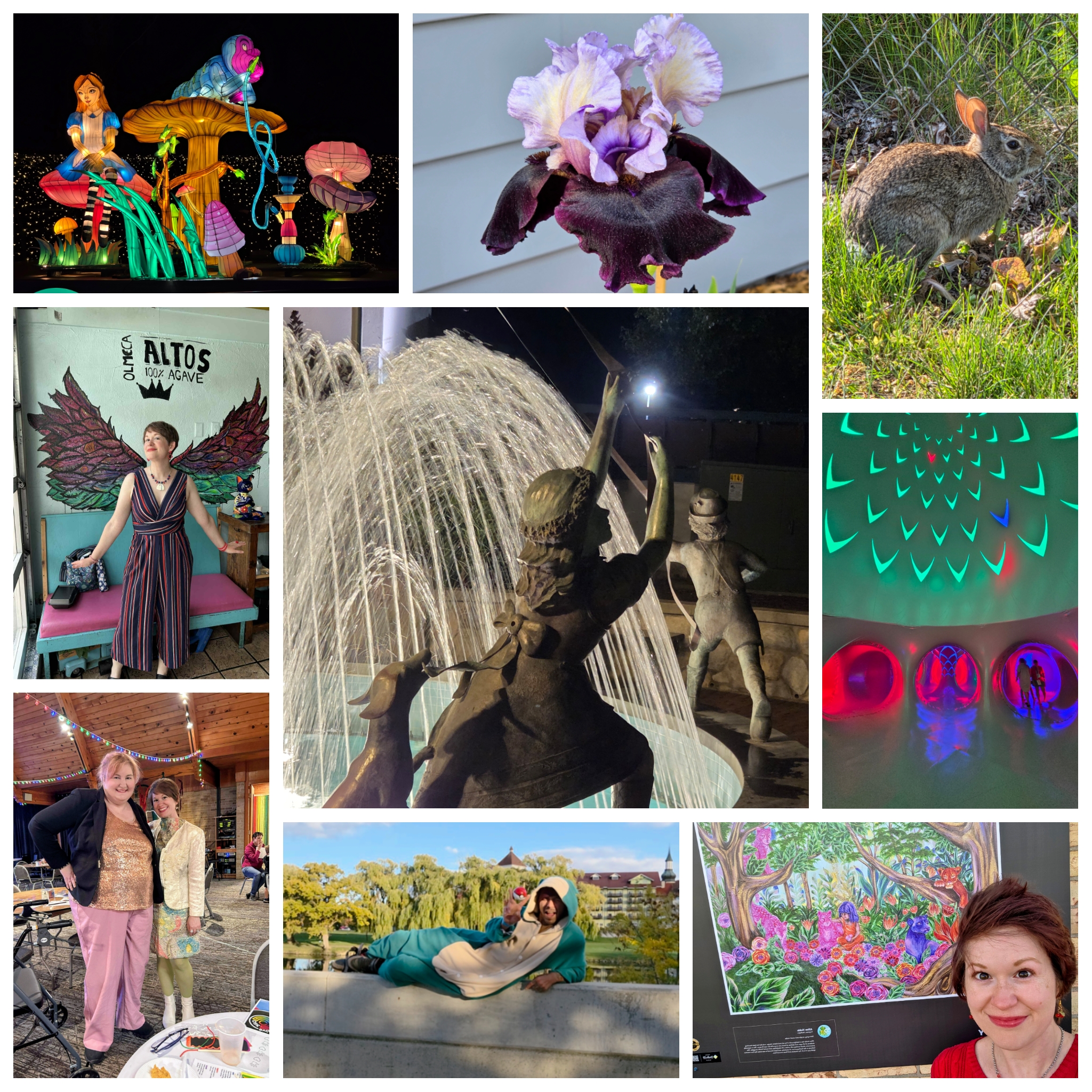
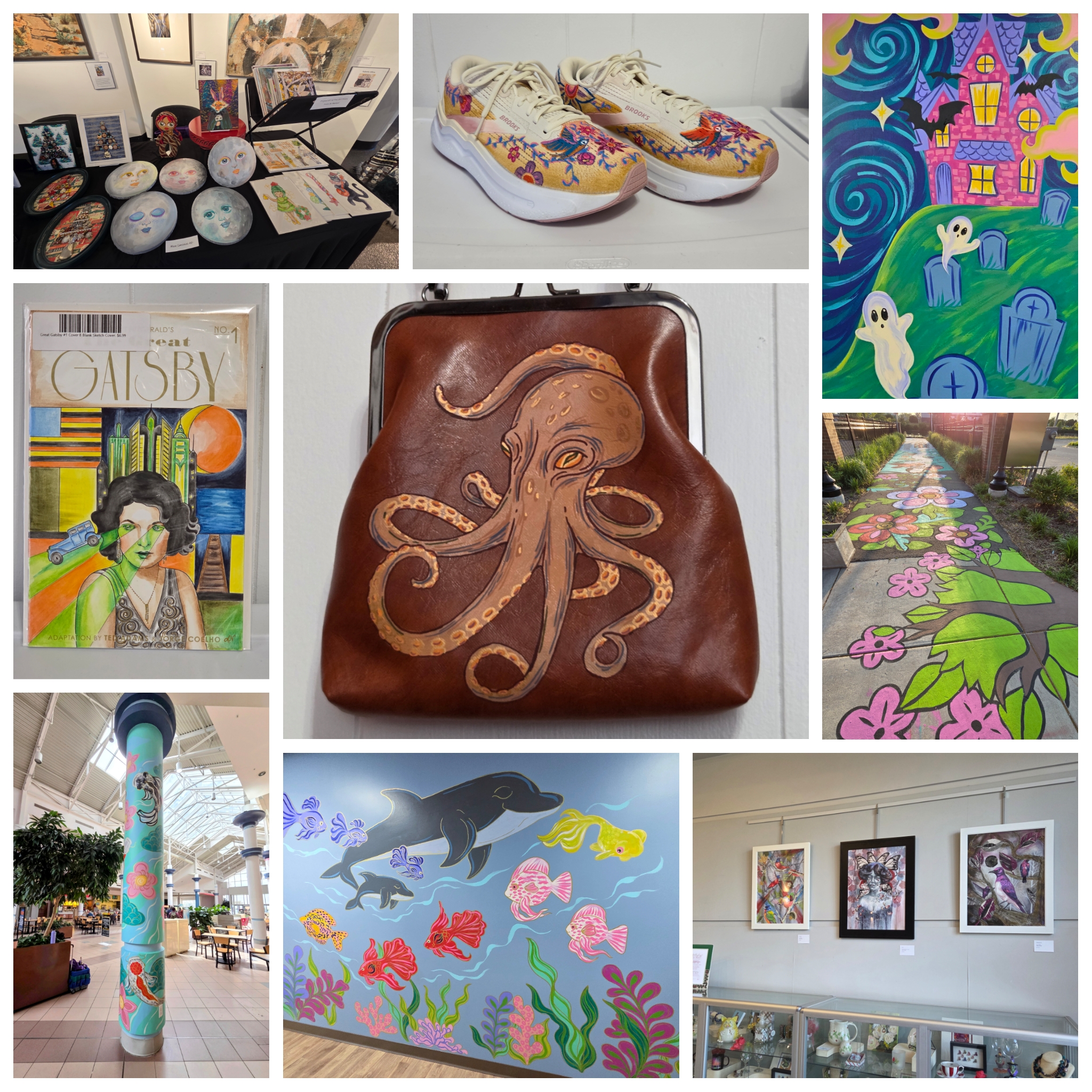
Even though I’m no longer a frequent Instagram user, I still enjoy assembling my end of the year “Top 9” photo collages because if nothing else it is fun to look back on a year in pictures, one for life and one for art. This year, I found I didn’t have nearly as many photos to comb through because I had hardly taken any, aside from a lot of ebay inventory snapshots. This year was exciting and fulfilling professionally, but I’ll be honest it was tough, and I didn’t find myself with much energy reserve to enjoy the milestones. Flying by the seat of my pants, I guess there also just wasn’t ample time to capture the ride along the way.
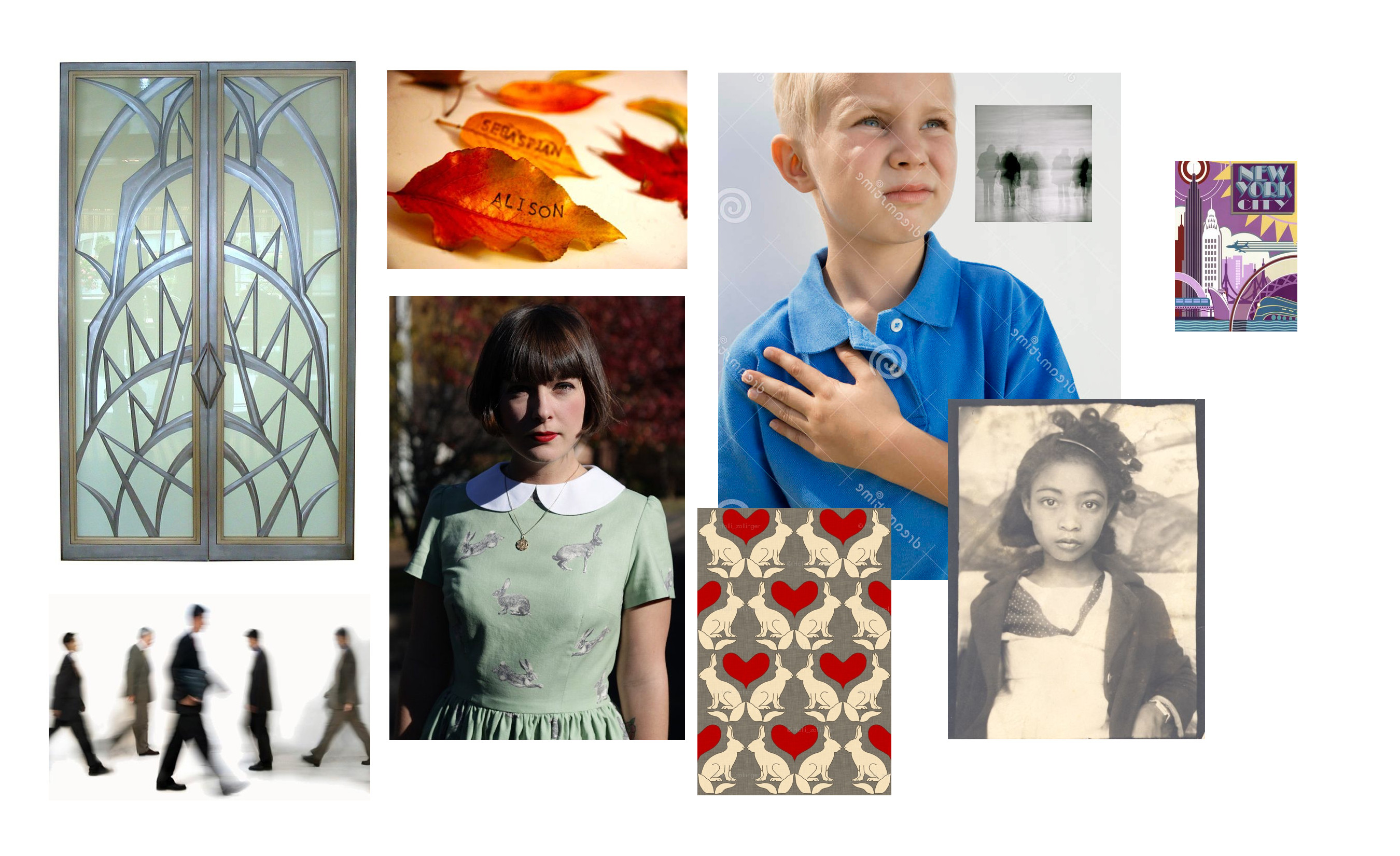
I have always been a bit extra-fascinated with personal photos. Back before digital and before everyone shared their photos online, sometimes you’d visit a friend or relative and they’d ask if you wanted to see their vacation pictures, snapshots from their birthday, etc. (aging myself here). A stack of newly developed photos or an album would be passed, the owner offering a verbal commentary along the way. In some this would elicit internal groans, but as a kid I was always happy to be a captive audience because I just loved looking at photos, anyone’s photos at all. Remember, I’m talking about pre-daily internet access. Looking at photos of different people and environments than what I was used to allowed me to soak in more visual details to use in drawings (and yes, even as a kid bits and pieces of these visual stories would end up in my marker sketches.). I distinctly remember that I wouldn’t just look at the main focus of a photo, but would scan the entire image methodically, taking note of what objects were sitting on the counter way in the background, what pattern was engraved on the button on one of the figure’s shirts, what type of knick-knacks were sitting on the corner shelf, just blurred out of focus. To me, these were important clues to the rest of the story, more so than the expressions on people’s faces.
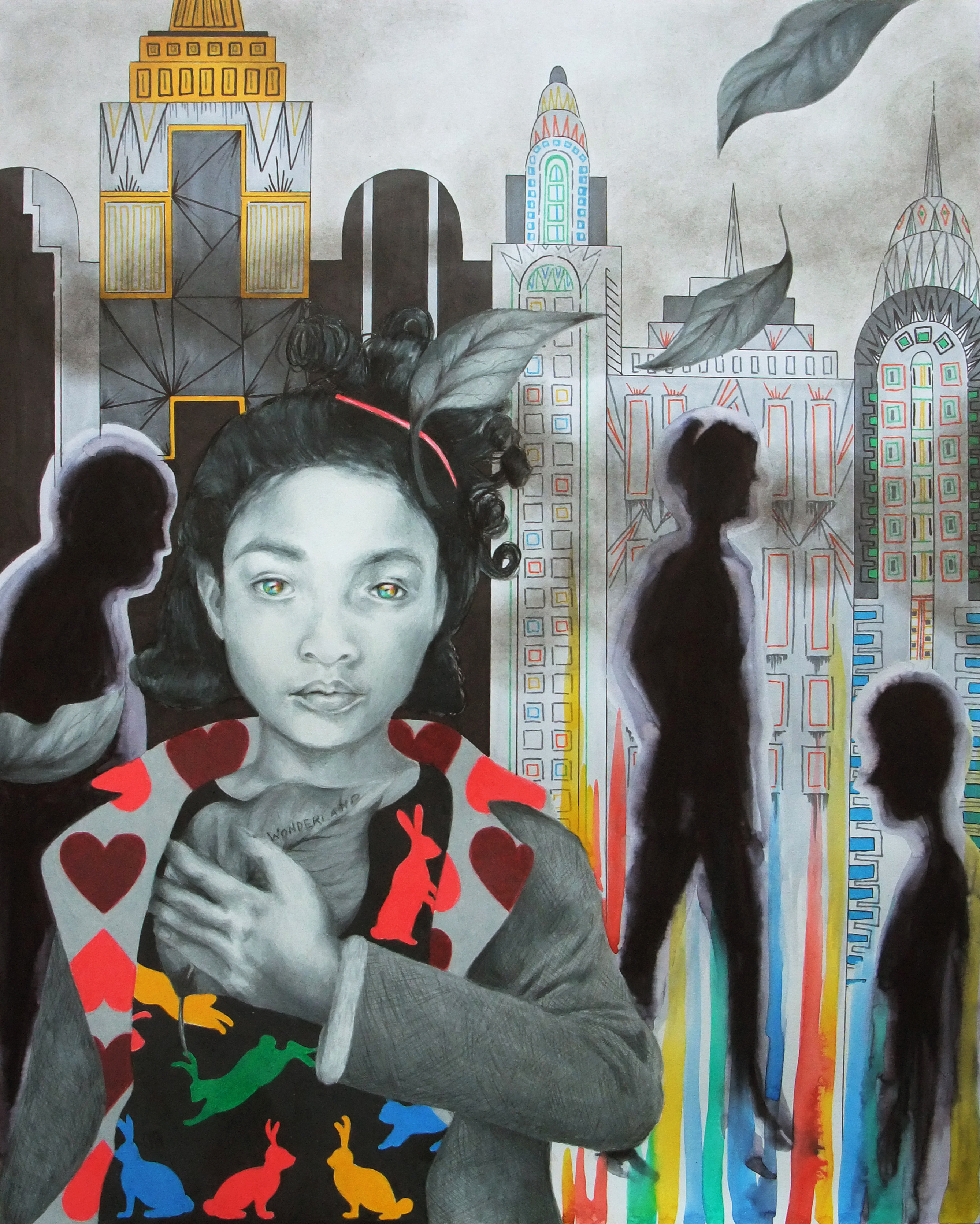
I still use that philosophy, that it is the small, overlooked details that reinforce a feeling and a story, in my art today. I am forever both physically and in memory collecting images to combine together to weave a story – a captivating fabric print here, an interesting nose there …
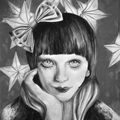
19×24″ Prismacolor Pencil and Ink
In a year as harried and chaotic as this one just passed, maybe what we choose to stop and capture says something about our story as well.
It’s been a tough year in the United States for the word “diversity”, with a mass confusion of what DEI (Diversity, Equity, Inclusion) is versus what affirmative action is resulting in unfortunate fallout, particularly for individuals with disabilities (See video below … who says autistic folks can’t be sarcastic/humorous when the need arises? You know what Oscar Wilde said, ‘If you want to tell the truth, make them laugh otherwise they’ll kill you.). Michigan Arts Access, a program I have worked with as a resident artist that provides arts education in special education classrooms, lost major funding sources for next year because their work falls under the “DEI” umbrella by including students with disabilities in elective opportunities that many other traditional students automatically receive. Unfortunately, this means their services probably won’t happen next year in less wealthy communities like mine. There was a general souring in public opinion towards the word DEI despite most people actually agreeing with the principles and practices of Diversity, Equity, and Inclusion when asked without using the acronym itself, according to research. If anything, this reveals how muddled understanding has gotten as we have access to more information than we’ve ever been expected to handle all at once, but that’s a conversation for another day.
The thing is, while equity and inclusion are sadly optional, in America we’re stuck with diversity whether we like it or not. This may seem too obvious to need reminding, but America is unique because everyone who lives here at one point came from somewhere else, and who has been here longer may at times be surprising (i.e. my Mexican partner’s family settled in Texas long before my ancestors came here from Italy, England, Hungary.).
Diversity is built into all of creation. The differences in plants, animals, and insects both visually and in how they function serve a purpose. Similarly, our different backgrounds, cultures, genders, and brains all bring something distinct to the table, and our society runs better when all are included and their gifts nurtured. Imagine what would happen if you had a vegetable garden, but decided tomatoes were your favorite so you’re only going to water those and just let the rain take care of the rest. Rain helps, but it’s not enough, and eventually the other plants would die, and you’d get pretty tired of only eating tomatoes every day. (Apparently I’m really into garden metaphors when it comes to people – see last year’s mural.)
We can’t marvel at the vast variety in a field of flowers or all the different patterns on the wings of butterflies, and at the same time be angry about differences in the people around us. We can’t become excited about the literal tour around the world we can take in almost any given city when picking a restaurant, but be upset that we have neighbors who came from the culture where those recipes originated.
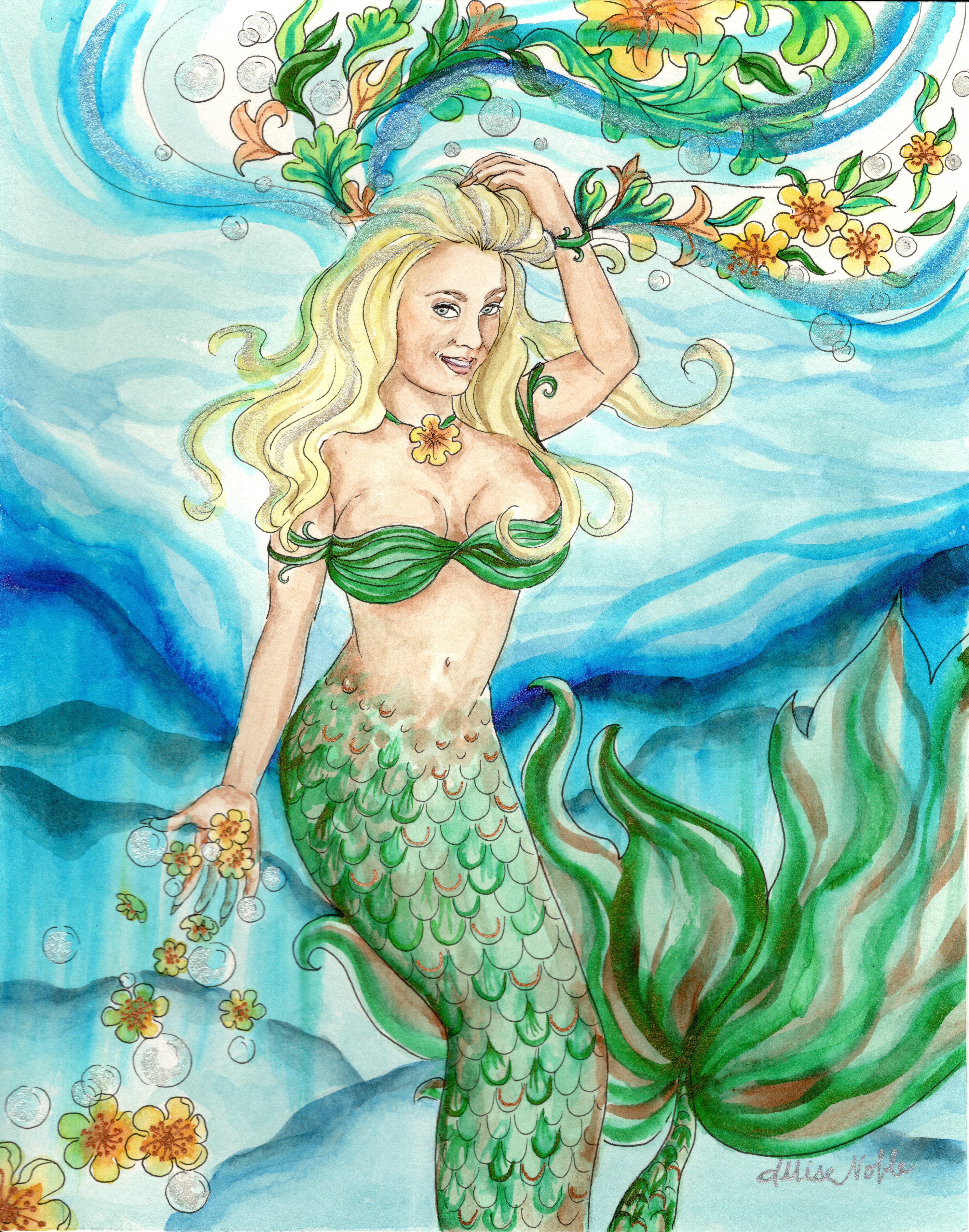
It may feel like diversity is ‘canceled’, but the very notion is ridiculous. I am in no way trying to downplay the significance of words and policies that communicate that certain people don’t deserve basic needs, education opportunities, or respect. However, individuals, and I daresay especially creatives, still have a choice. This new piece was recently created for an upcoming Fall show with the theme “Diversity Is Beauty And Strength”. I’ve also been working on a series of fantasy themed family portraits from a client who reached out to me from my ebay shop. She noted that she saw my series of cute angels/fairies and mermaids and noticed that I offered a bunch of different skin tone choices. She shared that her family is mixed race, and it’s difficult to find fantasy art that looks like them. Thus, one of the most fun commissions I’ve ever done was born. I enjoyed getting to know my subjects from afar through an exchange of personal stories, and channeling their joys, struggles, and dreams into these keepsakes. More still to come!
This year has been hitting creators hard, but art is communication and we creative people are in a unique position to pivot the cultural conversation. How do you think diversity enhances the way you experience your daily life and community?
An artist friend recently shared with me an article they wrote titled “The ABCs of Underground Art”. I really enjoyed it, and they encouraged me to write my own ABC’s of the type of art that I do as a fun journaling prompt to use to unwind and organize your thoughts. Those that have followed me for awhile know that I don’t typically stick to just one type of art, so to open up the limits I decided to make my “alphabet” the ABC’s of Creation. I have assigned a word to each letter, along with a video of my illustrating a cool little ACEO sized letter inspired visual to go with each word. Read, listen, or both – whatever works!
H is for Heart. Creating takes heart. It’s something you can’t quite put into words, but it’s usually obvious when a creator’s heart isn’t in something they’ve made and they are just going through the motions. That is one of the reasons I can’t get behind AI art. It isn’t measurable, but even not accounting for the goofy mistakes, something always seems like it’s missing. This is true to my eye whether it’s AI digital art, ‘photography’ or rather what is made to look like photography, or a logo design. I myself am not a fan of pure copying from a photo without making any creative changes, but even in art where the goal is to simply replicate a scene in the artist’s chosen medium, if the artist is excited about what they are observing and the process of recreation it definitely shows through.
A departure from my usual posting, but some recent complaints about art opened up the opportunity to open up a discussion about the purpose of public art, how we react and interact with it, how culture views who and what “deserves” to be immortalized, and what makes public art successful. This is especially interesting to me as I have been participating more and more in public arts myself.
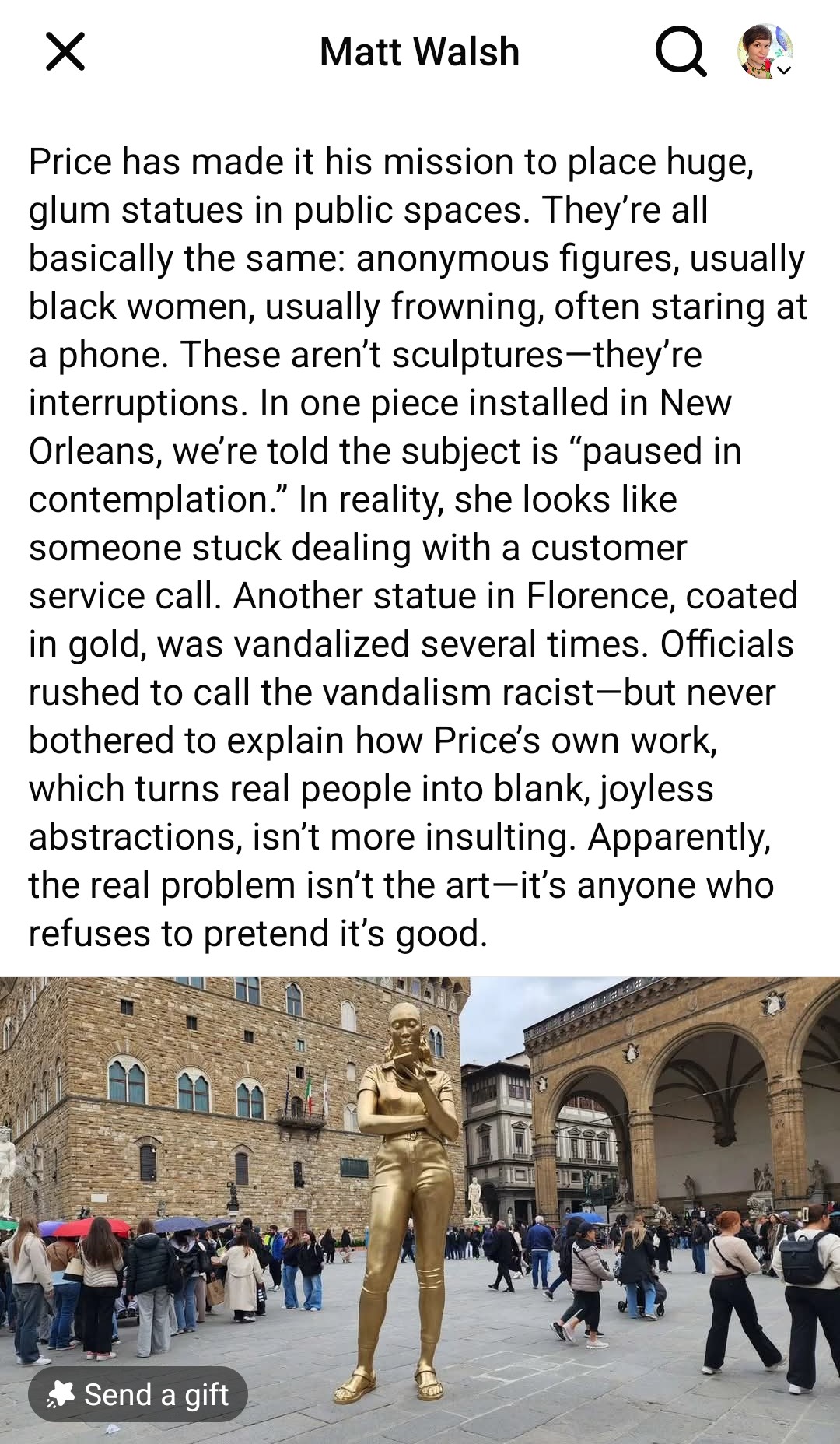
Thomas Price is a British sculptor who installs over-scaled sculptures of everyday figures in public spaces, centering on black women. His intent has been quoted as “I want my sculpture to be an opportunity for people to connect emotionally with an image of someone they might not have noticed before” (emphasis added by me). This is exactly the message I got out of it when I looked at it before even reading this statement. Unfortunately, not everyone is seeing or understanding the same intent, and many are flat out losing their minds over his installations.
The blurb that encapsulates the myriad of complaints best is screenshotted below:
Keep in mind, this post is intended to provoke thought and discussion. In no way am I telling you that you have to like these sculptures. We all are drawn to different things, and that is perfectly fine. However, “I don’t like new things, grumble grumble, or phones, grumble grumble, or looking at art, and for God’s sake will someone tell that woman to smile!” is not a nuanced or valid critique. There’s a lot here – let’s start at the top, shall we?
One of the reasons more communities are embracing public art is precisely because it makes art accessible. It integrates art into our everyday life so that we don’t have to set aside time (and often money) to travel to a museum to experience visual arts and culture. This could become especially important as funding to museums in the US becomes uncertain. Public art promotes tourism, boosts the local economy, and fosters cooperation and communication between people of all different backgrounds, ages, and abilities. Additionally, public art specifically designed to communicate about marginalized groups, and social and community issues has been proven to boost empathy, decrease stigma towards marginalized individuals, encourage philanthropy, and also build social trust and improved residents’ perceptions of their community. I have to see plenty of things in a day about topics I’m completely uninterested in, as do we all – Advertisements, anyone? I’m not sure why this is a huge problem.
Ah, and now we get to the classic “All art made after the 1800s is bad” argument, which I’ve never quite understood. There are many paintings featured in “classical” sections of museums that are just plain poorly painted. And yes, there is also modern art that I don’t understand and that doesn’t seem skillfully done to me personally. Again, we are all drawn to different things and typically time period has nothing to do with it. Whether you like them or not, there is no question that Price’s sculptures are skillfully created. They are incredibly realistic with every hair given texture, every wrinkle in the clothing perfectly captured, accessories and objects accompanying the figure created in identical detail to life. The only difference is that classical sculpture has been around longer. Do you know why in those old Greek statues the figures are wearing robes instead of jeans? Not because it looks more “fancy”, but because that’s what they wore when those sculptures were created! Remember, there was a time when every piece of classic art was considered “modern” as well. I remember my middle school art instructor explaining that the reason so many artists draw or sculpt nudes is because it makes them timeless. Any clothing, no matter how understated, is going to eventually look awkward and date a work of art. Something tells me the people that didn’t like these golden ladies would have been even less pleased had they been unclothed, however.
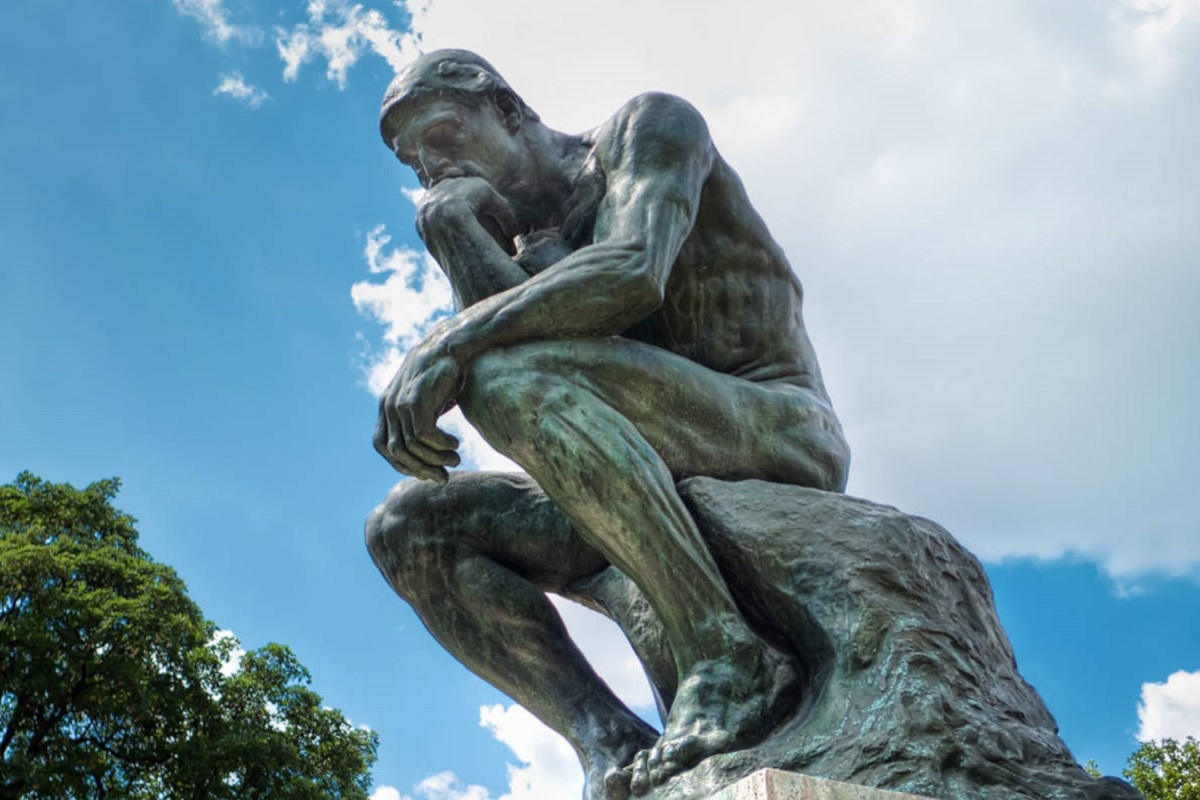
Look at this Rodin piece, art from the period when artists actually knew what they were doing! Oh wait … he looks a little, dare I say ‘gloomy’, and check out that shlumpy posture! Hm … maybe what people are telling us is the problem with these works isn’t actually the real problem.
Creating sculptures representing typical, everyday neighborhood folks and placing them throughout public spaces is not new. Even in the small communities I’ve lived in, there have been similar installations in both Midland, MI and Saginaw where I now dwell. What’s new is the accompanied outrage.
I read a study, referenced earlier, about how art that communicates about marginalized groups (or depicts figures not often seen in fine art) can inspired empathy and stronger community, but it isn’t a magic aura that is going to just radiate off of a sculpture or mural and instantly transform every single person’s heart that walks past it. It takes time, and it’s messy. One of my favorite pieces I’ve created of a young woman with down syndrome was printed on a metal sign along with many other works along a walking path in a nearby community. A Neo-Nazi group slapped a number of their promotional stickers over it – thank goodness for goo-gone. It won Best Of Show at 2 different events, and not everyone was happy about it or understood the point. Many others celebrated – You will not please everyone no matter what your field.
That being said, if a public art series is almost universally disliked by the public, then can we say it’s successful, that it is achieving it’s intended goal?
If as an artist, you are trying to reach the wider community but they don’t seem to be understanding your message then yes, sometimes it is time to go back to the drawing board and make some adjustments or try something different next time. However, if you are observing that it seems the public is determined to get your message wrong no matter what you create, it may be time to be true to yourself and persist. It’s hard, and there isn’t always a clear answer. That choice is ultimately up to the artist. We don’t have to like every piece of art we see, but remember that artists are actually human beings, and if you think you have a better idea then go pitch it! Most calls for public art in all communities are looking for ideas from everyone, whether you are an “official” exhibiting artist or not. Collaboration and communication accomplish more than complaining. I’m not saying it’s easy, but it’ll certainly leave us all a heck of a lot happier and more fulfilled.
Artists and non-artists alike, what are your thoughts on these pieces, on public art in general? Inquiring minds want to know!
An artist friend recently shared with me an article they wrote titled “The ABCs of Underground Art”. I really enjoyed it, and they encouraged me to write my own ABC’s of the type of art that I do as a fun journaling prompt to use to unwind and organize your thoughts. Those that have followed me for awhile know that I don’t typically stick to just one type of art, so to open up the limits I decided to make my “alphabet” the ABC’s of Creation. I have assigned a word to each letter, along with a video of my illustrating a cool little ACEO sized letter inspired visual to go with each word. Read, listen, or both – whatever works!
G is for Gesture. I mentioned in letter E about how some of my art students with disabilities struggle with grip or coordination and how that changes their creating. Limitations can change an artist’s signature style and actually make it more recognizable. A prime example of this is a piece I own by a local artist with Parkinson’s, Patrick Humphreys. Another great example of this is renowned artist Henri Mattisse’s move from painting to collage after his dexterity was effected by illness. This new style ended up earning him a stained glass commission for the famous Rosary Chapel in France. The way we move our arms, the way we hold our tools, all of these things craft our creative voice. Our “gest” is distinctive to us as individuals, similar to how our auditory voices have different tones, speeds, and ruthyms. I was told recently that I even hold my pencil like an artist. This made me chuckle a bit as all through elementary school, I was told I hold my pencil “wrong”. The “right” way felt harder for me to control and hurt my fingers for whatever reason, so I did what came naturally to me. Imagine thinking there is only one way to hold something, or move through space, or add color to a piece of paper and that the same thing will work for everybody. The first thing I tell my students of all abilities when they say, “My art doesn’t look like yours” is GOOD! It’s not supposed to! Art can be skillfully done without looking exactly like the work of your instructor or favorite artist.
Patrick Humphreys, Artshop Students Sarah G., Christina G., and Colleen D.
Long ago, I’m talking nearly 10 years ago, I had an idea to explore color theory and color psychology through 5 color-themed pieces centered around the 3 primaries, and black and white. I completed the piece representing “White” first to get the most difficult one over with as exemplifying the absence of color in a piece of art is not always so easy, and white in general has to be my least favorite color – probably why I never succeeded in my original field of interior design as that seems to be all people want nowadays. But I digress …
I immediately after finishing White/’The End Is Also The Beginning’, started a piece for “Red”, much more a color to my liking. But then, the great covid catastrophe happened, life was weird, I got going on other projects, I had no clue how to finish the background, I got tired of coloring the pattern on the dress (Why oh why didn’t I just use fabric again like the first piece!), and there it sat abandoned inside an XL drawing pad for 6 years. I thought about just throwing it away as I wasn’t sure I was ever going to finish this series anyway. I know you have to be careful with this, but I am a huge advocate of not throwing old or unfinished art away because with a new perspective years later, you can make magic out of it. Behold, Red, or ‘Attachment’.
Red is without a doubt the strongest color emotionally, and the color that commands the greatest response both positive and negative. It’s no accident that stoplights and stop signs are red. Although, I remember reading the sort of bio in the front of an art book by one of my favorite artists, Ray Caesar. He mused on how he had always struggled with driving because to him red was an action color that meant “GO” rather than stop. That pretty much sums up the nature of red, commanding but conflicting.
It creates a response, but what kind of response widely varies by person and situation. Advertising uses red to create a sense of urgency, draw attention to a product or special sale, and make viewers think they HAVE to do something. Red is super stimulating especially when a bright primary but even when it’s a darker version as well, and can be overwhelming or off-putting to some. It symbolizes passion and romance, the color of the heart and of our blood. Fire is associated with red and red can also symbolize anger or rage (hence the saying “seeing red”), aggression and dominance. Red means luxury – think of the old Hollywood glamour classic red dress, red carpets, red lipstick, and the Christian Louboutin red soles.
Asian cultures have a particular relationship with red. In India, red is their traditional wedding dress color rather than white. In Japan, red is associated with cultural values of strength and sacrifice, but also expressions of joy, signified by a prominent red circle sun graphic on their flag. In China, red is an important symbolic color for good luck and prosperity. Across the continent, red is seen again as a warning color but this time to stave off ‘evil spirits’ or unpleasant circumstances.
Red tells stories of both joy and fortune, and tragedy and violence. It creates strong reactions and emotions, but which ones may come forward can be confusing and conflicting. Red, of all the colors, seems to be the color of our living story and our relationship to others.
Who knows, maybe I will revisit this series and keep going with it when I have the time. After all, I still have my concept sketches for blue, yellow, and black – As I mentioned, when it comes to drawings I don’t throw anything away! 😉
My spirituality and faith resonate with me the most when I think of God as an artist. I don’t feel closest to God in the practices of church, though I do pop in occasionally for the community aspect. I’ve never been much of one for traditions, or groups, or organized religion in general even growing up raised as a Christian in childhood/teenhood. I hated the forced socializing of youth group after already draining my battery at school all day. As someone with about a two-note singing range, and who is also picky about the style of music I like, I never understood why singing was the only way I was able to celebrate faith. Can’t I stand in the back and draw or paint??? No, it is when I am outside alone in nature, taking in all the details of the sky, the tiny veins on a leaf, the beauty and intricacy of moss and mold, the teensy tiny legs of scuttling insects, the many colors (in Michigan, mostly many shades of black, yellow and brown but still!) of a bird feather, that I feel my faith bloom.
No matter what your beliefs are, we can all agree that we are blessed to be surrounded by so much vibrant beauty in our natural world. The plants and living creatures we share our lives with are so detailed and unique in color, pattern, and personality – the most amazing works of art! Our surroundings could have been all gray, streamlined, and plain and still function – but instead, we have been given the greatest gift. We are lucky to be surrounded by such diversity. Meditating on this thought helps me remember gratitude, and feel a connection to the world around me and my place in it.
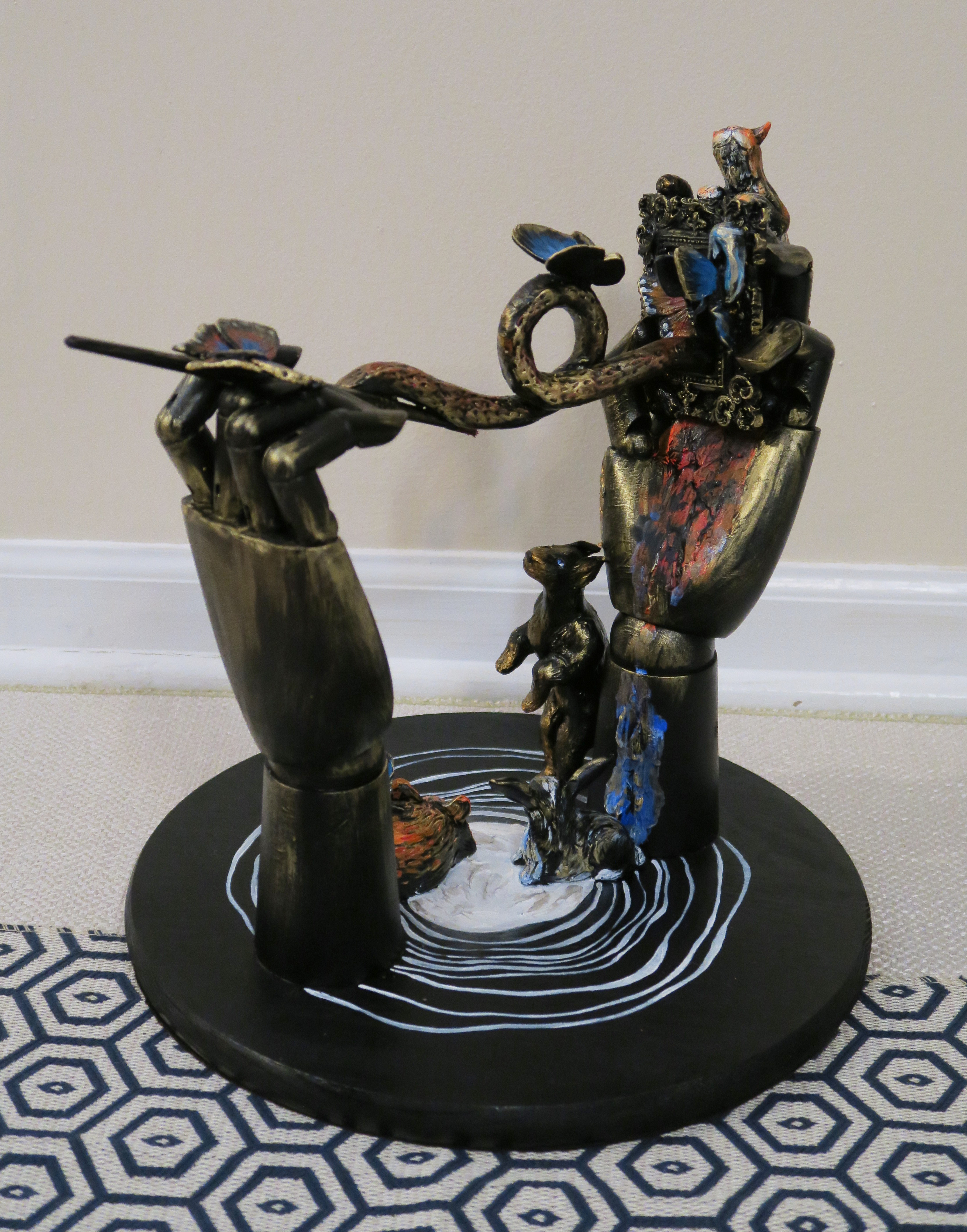
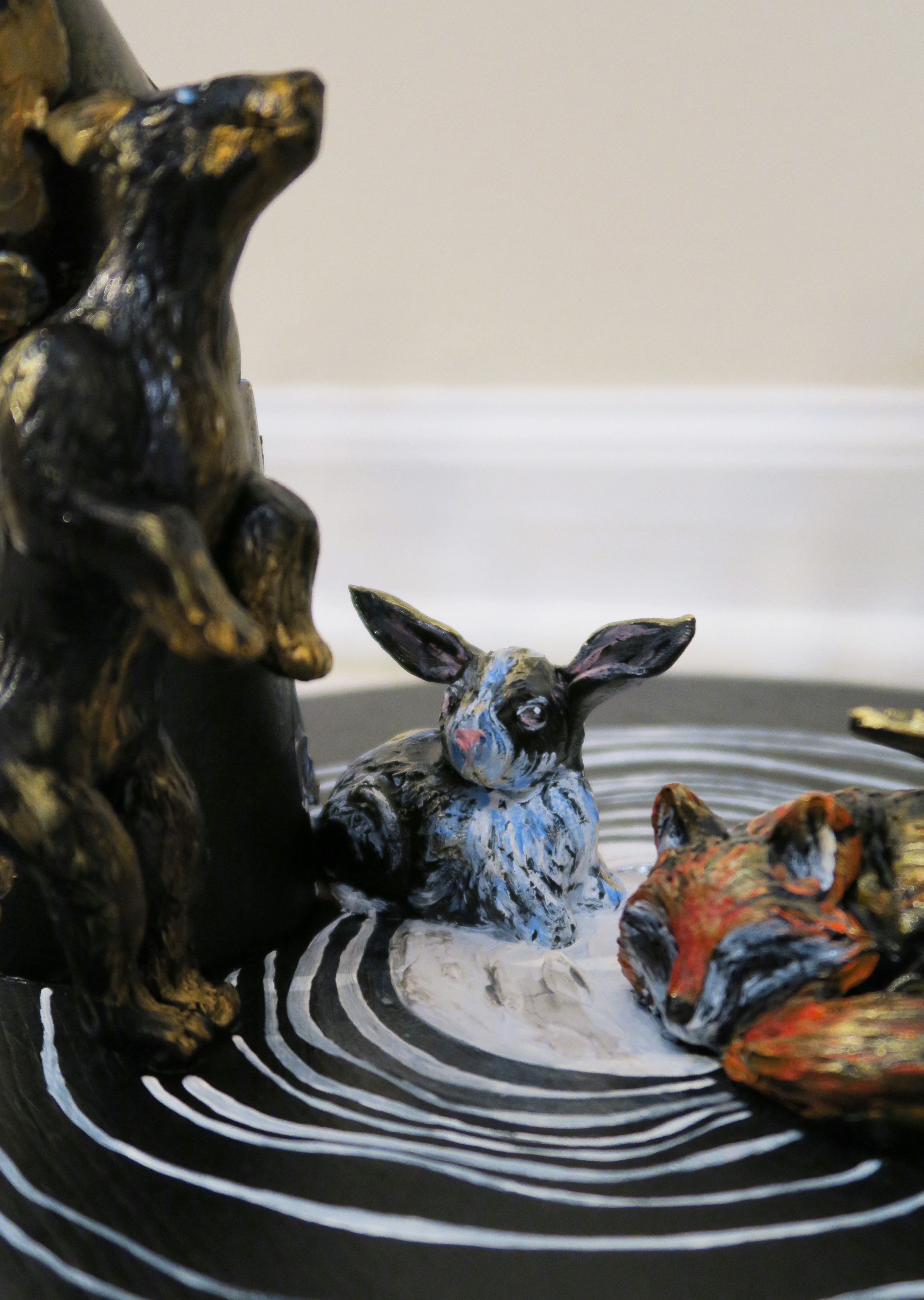
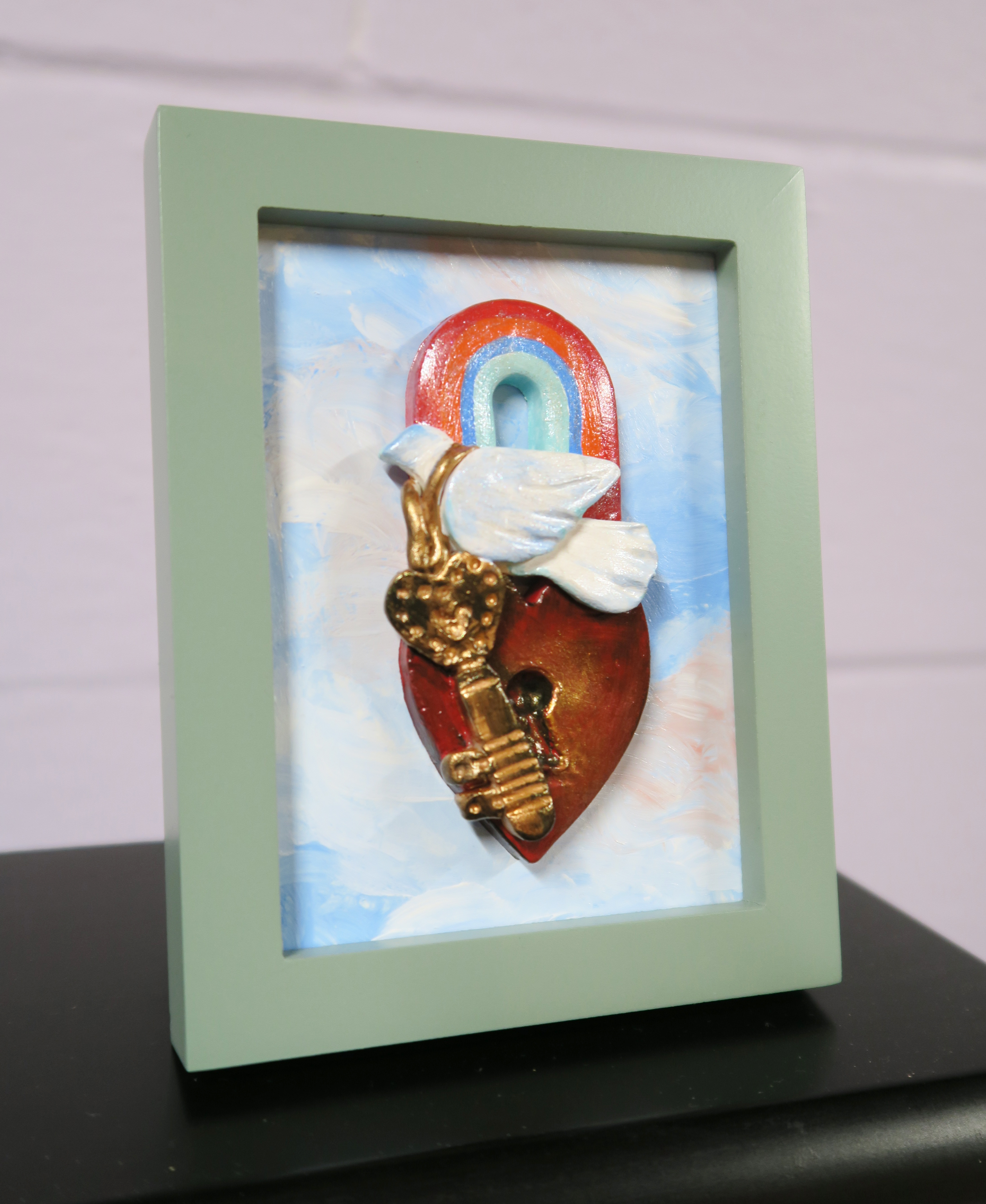
I am primarily a 2D artist, but was opened up to the possibilities of clay hand building when I took a beginner class with Artshop, the inclusive program I am the lead instructor for. I later ended up as a long term sub now and again for this very same class. Though I never made anything notable out of traditional kiln fired clay, I discovered I could do the mini, picky little detailed things I wanted to with polymer clay, and even better for me I wouldn’t need the use of a kiln. Part clay, part assemblage, I sculpted all of the animals, and combined them with wooden drawing model hands, a sacrificed paint brush of mine that was past its prime, and a miniature picture frame left over from the tiny reliefs I first started creating when getting into polymer clay (The first on the left is still available in my shop, so take a look!).
3D art was always such a struggle for me in class throughout grade school and college, so I never dreamed my first real attempt as an official artist would be accepted into a juried show! My mind is turning over all the possibilities for the future, and I am excited to continue lifelong learning in arts.
An artist friend recently shared with me an article they wrote titled “The ABCs of Underground Art”. I really enjoyed it, and they encouraged me to write my own ABC’s of the type of art that I do as a fun journaling prompt to use to unwind and organize your thoughts. Those that have followed me for awhile know that I don’t typically stick to just one type of art, so to open up the limits I decided to make my “alphabet” the ABC’s of Creation. I have assigned a word to each letter, along with a video of my illustrating a cool little ACEO sized letter inspired visual to go with each word. Read, listen, or both – whatever works!
F is for Folk. According to Merriam Webster, folk art is an expression of community life distinguished as different from self-conscious or academic expression. It is a communal language. Communal and public art is an important step in the creator’s journey. Having just closed one of the largest public arts projects of my career, the eb and flow of both learning and imparting simultaneously is magical. Thinking in terms of expressing your own unique concept while making sure it is executed in a familiar enough language that others will be able to understand and even take part in the process is another push and pull that is such a catalyst for growth. Creativity will bring people together – it must.
An artist friend recently shared with me an article they wrote titled “The ABCs of Underground Art”. I really enjoyed it, and they encouraged me to write my own ABC’s of the type of art that I do as a fun journaling prompt to use to unwind and organize your thoughts. Those that have followed me for awhile know that I don’t typically stick to just one type of art, so to open up the limits I decided to make my “alphabet” the ABC’s of Creation. I have assigned a word to each letter, along with a video of my illustrating a cool little ACEO sized letter inspired visual to go with each word. Read, listen, or both – whatever works!
C is for craft. Another word for creating something is to craft this or that object. This may be an unpopular opinion in the art world, but I get frustrated when I am pulled into conversations about “art vs. craft”, what pursuits are fine art and what is “just” crafting. I sure can’t make a quilt. Why should that be considered a lesser skill, especially with the amount of math and attention to detail that is involved? I love when gallery artists give the middle finger to what is supposed to be sophisticated materials, and add glitter, beads, paper ephemera, buttons, and other craft supplies into their work. Without craft, we are excluding an entire discipline that could teach us new ways to approach our art.
Above is a closeup from one of the piece’s in an inspiring Mark Messersmith exhibit I was lucky enough to catch last Fall while visiting family in Ohio – I’m detecting some GLITTER!
An artist friend recently shared with me an article they wrote titled “The ABCs of Underground Art”. I really enjoyed it, and they encouraged me to write my own ABC’s of the type of art that I do as a fun journaling prompt to use to unwind and organize your thoughts. Those that have followed me for awhile know that I don’t typically stick to just one type of art, so to open up the limits I decided to make my “alphabet” the ABC’s of Creation. I have assigned a word to each letter, along with a video of my illustrating a cool little ACEO sized letter inspired visual to go with each word. Read, listen, or both – whatever works!
B is for Beauty. Of course, when we create something we hope others will want to look at it (or listen, or watch, or read …) Beauty means different things to everyone. The great thing about that is, there is a pretty good chance that someone out there will find your creation beautiful, even if it doesn’t fit the norm of how beauty is typically defined. 7 years ago now, I created one of my favorite pieces of a young woman with down syndrome looking joyful, confident, and gorgeous. When it was shown for the first time at an exhibit and awarded, some viewers were confused, did not approve, or were even angry. (How did I know this? I have very acute hearing and was even playfully called “elephant ears” by my parents as a kid because I heard EVERYTHING.) Though the lack of openness towards diversity in portraiture or a disdain towards people with disabilities is definitely not ok, it is ok for us to not all agree on one definition of beauty. Many more people have adored this same mixed media drawing. We each get to define what beauty is for ourselves.
If you want to see the other letters all the way to Z, be sure to subscribe!














 Allise Nicole's Artistic Explorations