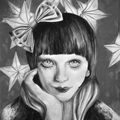
I’ll be honest, I do digital art when I have to for some logo commissions and such but I love traditional art, and I love traditional animation. I once had an art student who was very into Disney, and they would bring in printouts of digitally remastered screenshots and point out all the errors, circling them in red pen on one copy and then drawing over a 2nd copy to fix the colors, textures, etc. and restore them closer to the original, thus “fixing” it. That was their relaxing art therapy – and you know, I get it. That being said anyone who knows me can guess ahead of time I’m probably not going to be into AI visuals. Whether you like the look of AI art, or find it to be a soulless disaster, the fact of the matter is there are some questionable ways AI is trained to create “art” that definitely looks like stealing from other artists unless you are using the programs just as an idea generator or a “base” which you then digitally draw on top of and make your own.
The other concern which should be valid whether you enjoy AI or not is the fact that there are many people that already, even with AI generated images still in their wonky stage, cannot tell when something isn’t real. This could be problematic where things like news and current events are concerned, and AI has already been used to make fake photos of celebrities. I can typically tell pretty easily as I’m a highly detailed, visual thinking person. For those who have a more difficult time discerning, some suggestions I’d start with as far as what to look for are:
- “Snapchat Filter Face” – Everything is unrealistically smooth with a “glow” that doesn’t seem to be coming from any light source. Eyes often look like they are plastic, and seem glazed and overly glossy.
- Bizarre details such as clothing that doesn’t make sense (a floating collar above a scoop neck T-shirt for example), nonsensical background details such as a home kitchen with 3 ovens instead of cupboards and counter space, misspelled words, objects that don’t belong in the context of the scene, things that are out of proportion scale wise.
- Lack of clarity – Disappearing edges or fogginess in the background, and conflicting light sources.


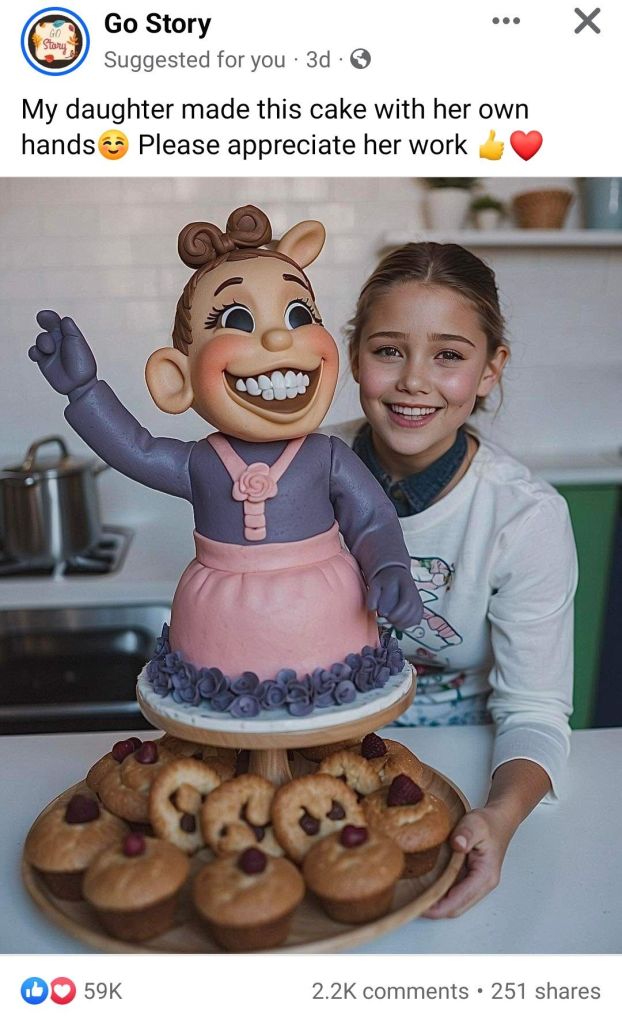

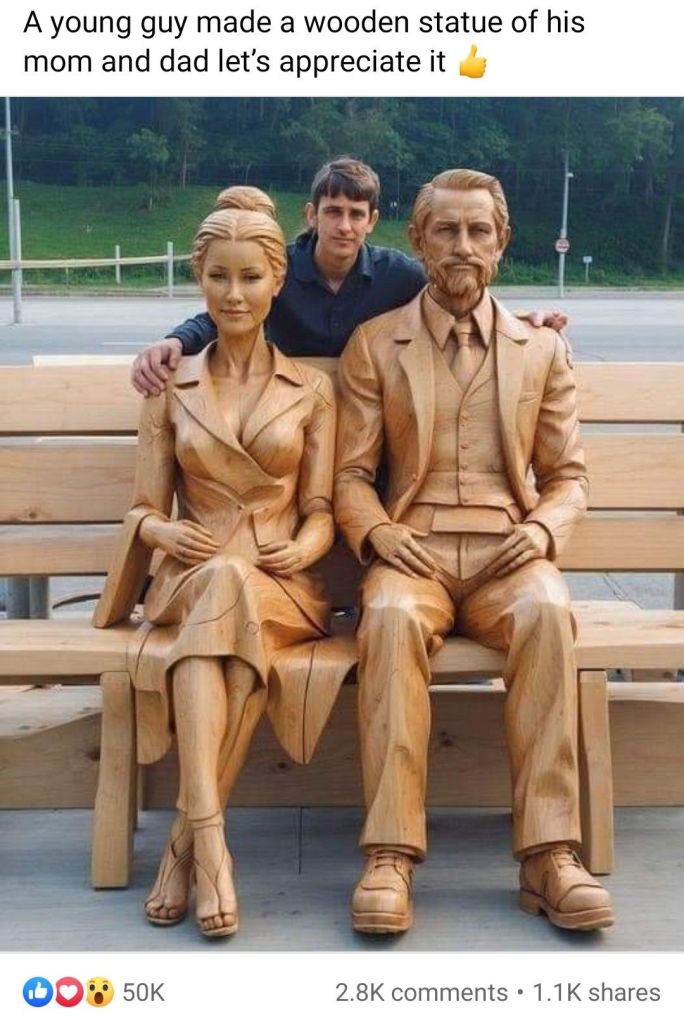
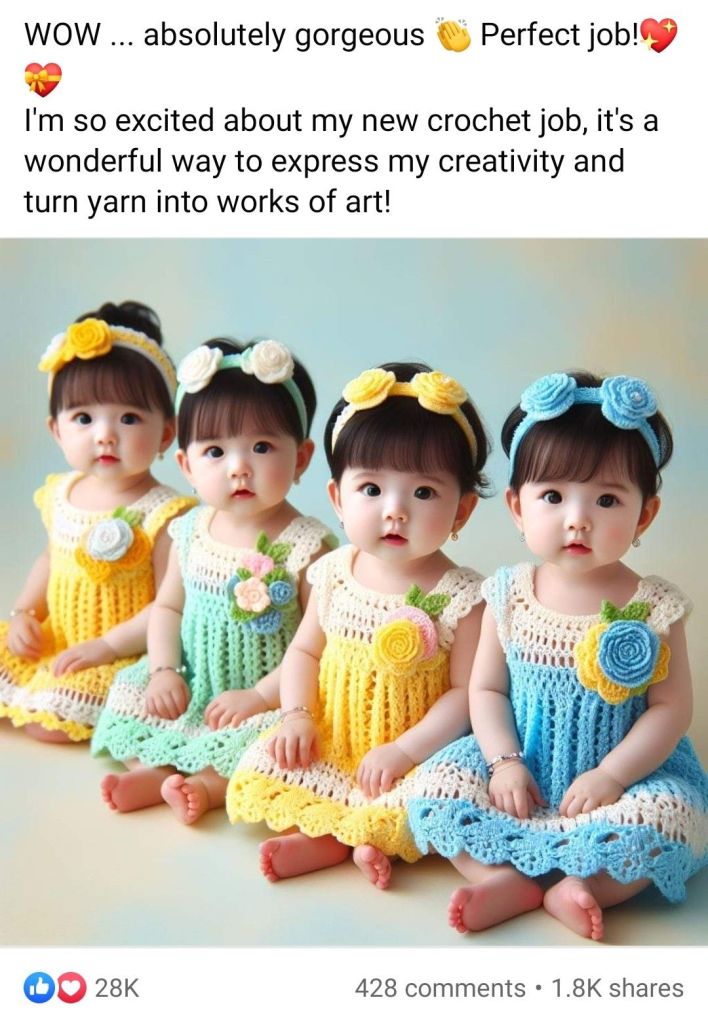
I think people escaping into AI also bothers me because it is just such a poor substitute for the real thing, and we could have the real thing! We could have good design. We could have fun, joy, and whimsy in the spaces we live and work in. We have in the past. We’d rather play house with imaginary designs of rainbow colored kitchens or striking gothic black and eggplant living rooms than actually utilize engaging design in the spaces we inhabit. We can make anything we want to live in, and white and beige boxes are really it? (I studied interior design in college, and am NOT practicing for many of these reasons, so I’m extra salty about this particular AI vein). Similarly, we can learn to bake, crochet and sculpt, and it’s a lot more satisfying for the soul than pressing a button. I resent the fact that AI is making creativity blasé.


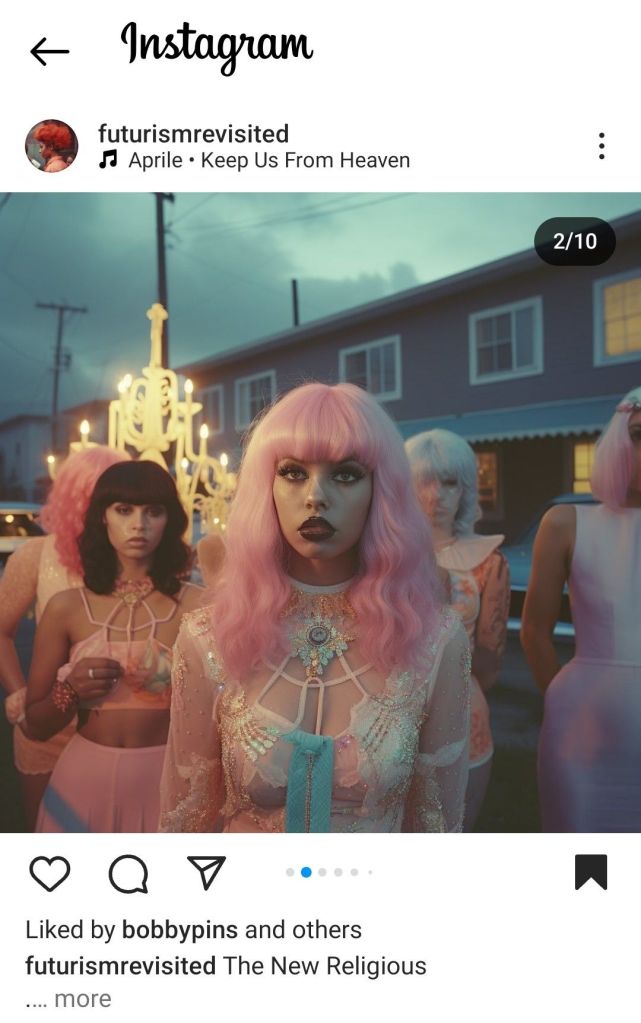
AI looks like a dream because of the missing details, skewed text and numerals, hazy edges, ambiguity, and even the nonsense. You’d think I’d love it as I’ve always been into surrealism and dream inspired media. I do love the below images (the creator openly expressed that Midjourney was used, which I appreciate. ).


Still, the human mind is an important element that’s missing. A big part of surrealism is psychology, opening your mind to the unconscious, and freeing oneself of social standards and social norms. AI is the exact opposite. It trains on immense amounts of existing images as well as popular opinion based ratings, making it a culmination of what is trendy, and often stereotypical. There is something to be said for using art to show us something we can’t see in real life as a means of visually communicating a real life emotion, struggle, or life experience. (Left, some of my works in progress. Right, one of my favorites from Remidios Varo, ‘Woman Leaving The Psychoanalyst’.)


AI does create some interesting opportunities for allowing those with dexterity issues from injury or disability to create visual art. Of course, I think of my students with disabilities that I teach on a weekly basis that work with these issues to still create handmade visual art just in a completely different way, and have to wonder if that isn’t still more satisfying. We actually have a 3D printer and I can’t get them to touch it! They want to get their hands in the paint and pastels.
Technology can be a great tool to help us innovate. In my opinion, it’s not being used well if it creates more sameness and overwrites creativity.
 Allise Nicole's Artistic Explorations