Books, Music and Film

An Artist’s Take On Miyazaki’s The Boy And The Heron

Though I’m a visual artist and not an actor, screenwriter, or animator I am a big movie enthusiast – I probably watch 4-6 movies per week! Every so often when I movie comes out that I find particularly inspiring or thought provoking, I like to share my take.

Though I’ve enjoyed some films over the years that happen to be anime and in general find Japanese culture intriguing and enjoyable, I am by no means an anime fan. I love Hayao Miyazaki’s films in particular, but I’ll admit not even all of his films warranted a re-watch for me (My favorites are Spirited Away and Howl’s Moving Castle). Before watching, I’d read that this was one of his least magical films. Though I was still intrigued and excited I didn’t expect to enjoy this as much as the aforementioned favorites because I do enjoy a great deal of magic and whimsy. Despite being grounded in reality, there were plenty of surprises and this film, titled in Japan “How Do You Live”, did not disappoint. I am going to give my perspective on the art and general themes but not get into the specific plot beyond the basic premise that can already be found in the film’s teaser description as I don’t want there to be spoilers for those who haven’t seen it.

Visually, I love the distinct differences in proportion, expression, and other aesthetic details present in each character. One of the main things that can get old about anime for me is that a lot of the characters tend to follow an archetypal formula in how they are visually presented, or all look the same. Nowhere is this attention to creating distinct features more present than in the case of the elderly maids that live with the main character and his family. Each woman’s personality comes forward before she utters a word, even the ones of the group that are mainly just background characters. Also important to note is from my observation, it is common in anime for characters to always be portrayed very stereotypically “pretty” and have super idealized characteristics. Miyazaki leans into the characteristics of old age in a way that is not pretty, but not frightening like Disney’s witches and instead adorable and endearing.
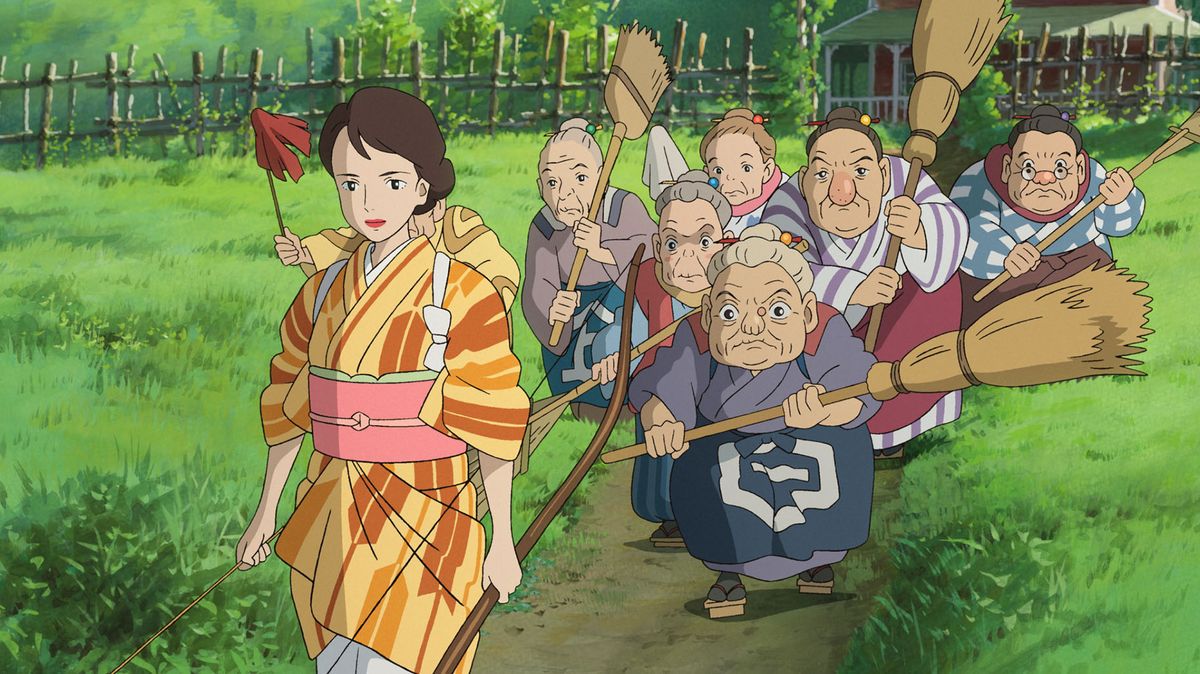
In this film in general, the background details are respected and given just as much care as the main focus of each scene. Each blade of grass, the details in the wallpaper or décor in a room, the woodgrain on a cabinet, are rendered in exquisite detail even though it isn’t really necessary for the story. This stands out to me as a 2D visual artist myself, and makes the experience all the more impactful.
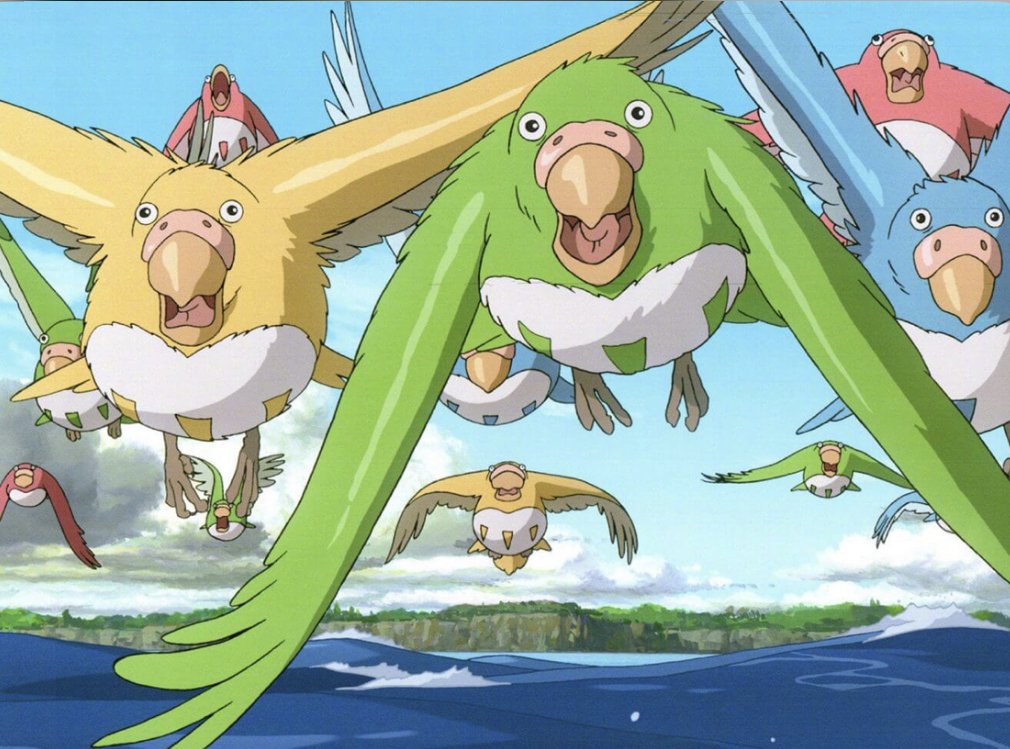
The richness in color, texture, and pattern especially within the animals that often appear in multiples is breathtaking. Even the creatures that are far away in the back, or covered by most of the foreground group are given just as much detail.
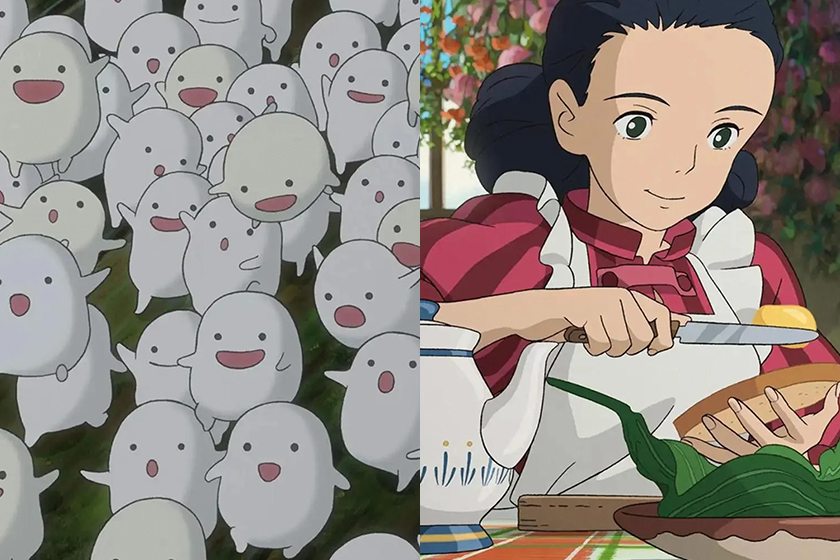
There are definite Wonderland elements along with the main historical story that was influenced by Miyazaki’s own life, growing up in Japan during WWII. Reminiscent of the soot sprites in Spirited Away, the Wara-wara are the adorable hoard of identical beings that you can’t help but smile at. Unborn souls that have yet to float up to earth, the scene involving these whimsical creatures was actually quite emotional for me though it was a small part of the overall story. The birds with hybrid human characteristics peppered throughout were also loads of fun.

I actually think the original title “How Do You Live”, though maybe a bit more convoluted and not as “grabbing” for potential viewers, fits the movie far better than “The Boy and The Heron”. This story is about so much more than just their journey together. This film was more accessible than many of Miyazaki’s others that were way out there in the fantasy realm. I mention Spirited Away often, and though I loved that movie for it’s unique visuals I didn’t grasp any understanding of it really until I took a course in Shintoism at college to fulfill a university program requirement! “The Boy and The Heron” was still quite open ended and doesn’t just hand the viewer the answers, which makes it all the more compelling.

The intersection of truth and curiosity is a major theme, as well as the question of whether one will choose reality over fantastical distractions, even if it is more difficult. The messages I heard after much reflection were that life is worth its many hardships for the good bits; we must discover and acknowledge our own flaws, not in self hatred but so that we can strive to be better; everyone has a backstory. Those who seem timid now, have gone through times where they had to be brave, those who seem settled and boring have had adventures, who you see now when you meet someone is not who they have always been, but who they were before has made them who they are now.

There are now more options than ever should we want to remain unfocused and distracted from our real everyday life, so this tale is a timely meditation.

Standard
Books

Stories As Inspiration

Remember what I said about myself and movies … I haven’t had even basic cable in years, and television shows generally don’t hold my interest, but I can’t get enough of books and movies. When I last talked about films, I was discussing movies that had visually inspired me as an artist. Those I chose to include in the list were chosen for visuals only, having nothing to do with the story line.

Awhile ago, I happened upon an article online as I traveled down the rabbit hole that is the internet … you know how it goes. The article was something like “10 Questions To Ask Yourself In Your 20s”, meant to help us young adults find ourselves and figure out what the heck we’re doing by percolating on the answers we came up with (I use the word “percolate” rather than “meditate” intentionally, because I have far too active an inner thought life to ever even attempt tranquil inner peace. I’ve come to terms with this fact.). One of the questions was, “What are your favorite stories, what do they say to you, and what does this say about you?” It’s an interesting thing to think about, especially for creative people since stories whether in film or print are an art of their own. I’ve shared my list here. These books and movies are not all necessarily the most mind-blowing, best written, or most awarded in their genre – that isn’t the point. These are the stories that my mind has continued to wander to from time to time since I first experienced them, or that I’ve found myself watching/reading over and over for whatever reason. The fun part after you make your own list is to figure out why that is.

What are my favorite stories?

Benny and Joon (film) – I swear I did not pick this because it has Johnny Depp in it, though that is what first prompted me to rent it back in the day ;).

  • No one is unlovable. We all have difficulties that we deal with, it is just that some come with a label and some don’t.
  • People are capable of becoming so much more than we’d ever imagine when given the chance.

Wristcutters: A Love Story (novel, later film) – Don’t let the title turn you off, this is actually a whimsical, heartwarming story (with some dark bits) that I remain glad a friend recommended.

  • Don’t despise where you are at in your life right now, or wish it away; there will come a time when you will miss it.
  • Sometimes what you are chasing after, what you think you need and want, will distract you from the opportunity for true happiness right in front of you.

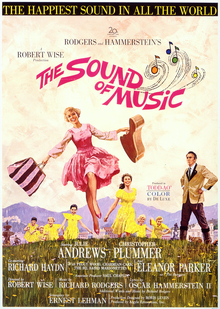
The Sound of Music (film) – I was listening to this soundtrack on my parents record player and dancing to it in the basement playroom as a little kid long before I saw the movie for the first time. I’m sure many of you have seen it at least once as well, because Julie Andrews is basically the Queen of Everything.

  • Don’t try to force yourself into a life plan that doesn’t fit you; it never will. You have a right to change your mind at any moment.
  • People don’t change by having anger or reproach directed at them, being insulted or accused. They change when someone is willing to love them where they’re at, but also respectfully challenges their ideals and pushes them out of their comfort zone in a kind but spirited way.

The Picture of Dorian Gray (novel) -This book made me an Oscar Wilde fan for life.

  • Don’t discount small choices, each decision we make shapes who we will become.
  • Be aware of who you allow influence over what you believe and what is important to you.

The Curious Incident of the Dog In the Night-time (novel) – I heard this book has become a play now, and I hope to see it someday. This story is told from the point of view of a young boy with autism, and for perspective alone I would recommend you give it a try.

  • Again, people are so much more than we let them be. Don’t box someone in and limit your view of their capabilities simply because of a label they’ve been given, or because their struggles are different from yours.

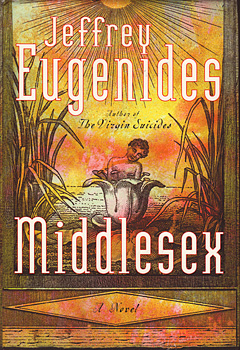
Middlesex (novel) – Certainly one of the most complex and interesting character-driven stories I’ve ever read, by one of my favorite authors.

  • Don’t be so quick to judge who someone is or what has made them the way that they are. Everyone has a rest of the story.
  • Oftentimes, the most courageous and subversive thing one can be is who they already are.

Howl’s Moving Castle (film) –

  • Again, always remember that everyone has a story, you only see a part.

I was actually surprised that many of the core takeaways from each very different story often overlapped (Though I shouldn’t have been – it makes sense I’d be attracted to the same theme that I value again and again represented in different ways). I can see my draw towards the celebration of idiosyncrasies, and the affirmation of individual human lives as intricate and full of possibility, in my surreal portraits that I’ve fallen in love with creating. I can even see evidence of living out the themes found in these stories in my career choice, not only opening up people’s capabilities through teaching art, but in working with people with disabilities, a group that is often unjustly marginalized and discounted. Stories are important. For creators of all types, our stories come out in what we create. But, even those who view themselves as the least creative individuals on the planet still tell a story in how they interact day to day with other people and with the world around them. So, what are some of your favorite stories?

Standard